

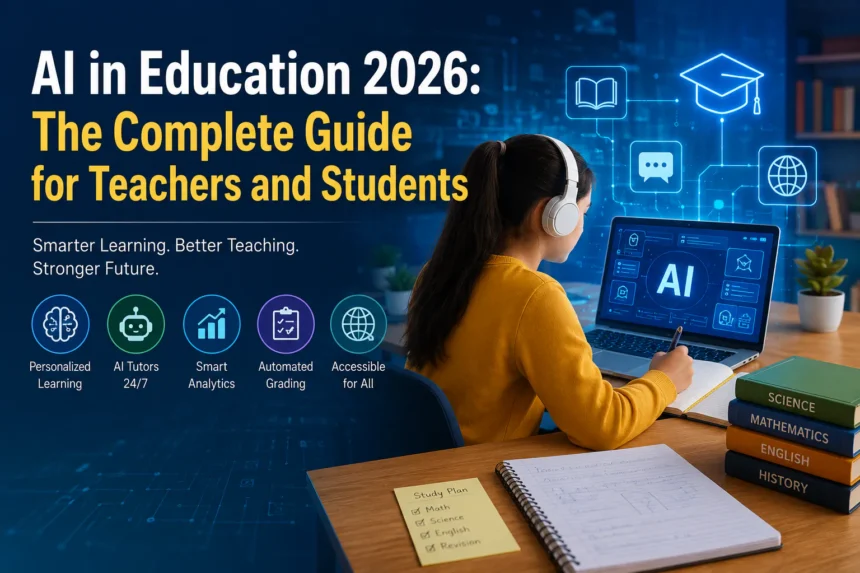
In 2026, AI has become an essential part of education across schools, colleges, and online learning platforms. From helping students learn faster to supporting teachers with lesson planning, AI is changing the way education works.
But the biggest question is, is AI making education better?
The answer is yes, when used correctly. AI is not replacing teachers or students. Instead, it helps them save time, learn more effectively, and improve the overall learning experience.
In this guide, we will explore how AI is used in education in 2026, its benefits and challenges, and how both teachers and students can use it wisely.
What is AI in Education?
In education, artificial intelligence (AI) refers to the use of intelligent tools and technologies to perform tasks, including developing study materials, checking assignments, responding to inquiries, and providing individualized learning support.
These tools learn from data and student behavior to provide better results over time.
Today, many schools and students use AI-powered platforms for:
- Online classes
- Homework help
- Language learning
- Exam preparation
- Attendance tracking
- Personalized study plans
- Automated grading
AI is making education more flexible and accessible for everyone.
How AI Helps Students in 2026
Students are one of the biggest beneficiaries of AI in education. Learning has become easier, faster, and more interactive.
1. Personalized Learning
Each learner learns in a unique way. While some people pick things up fast, others require more time. These days, AI systems can determine a student’s learning rate and tailor lessons accordingly.
For example:
- Weak topics get extra practice questions
- Strong subjects move faster
- Study plans adjust automatically
This helps students improve without feeling pressured.
2. 24/7 Learning Support
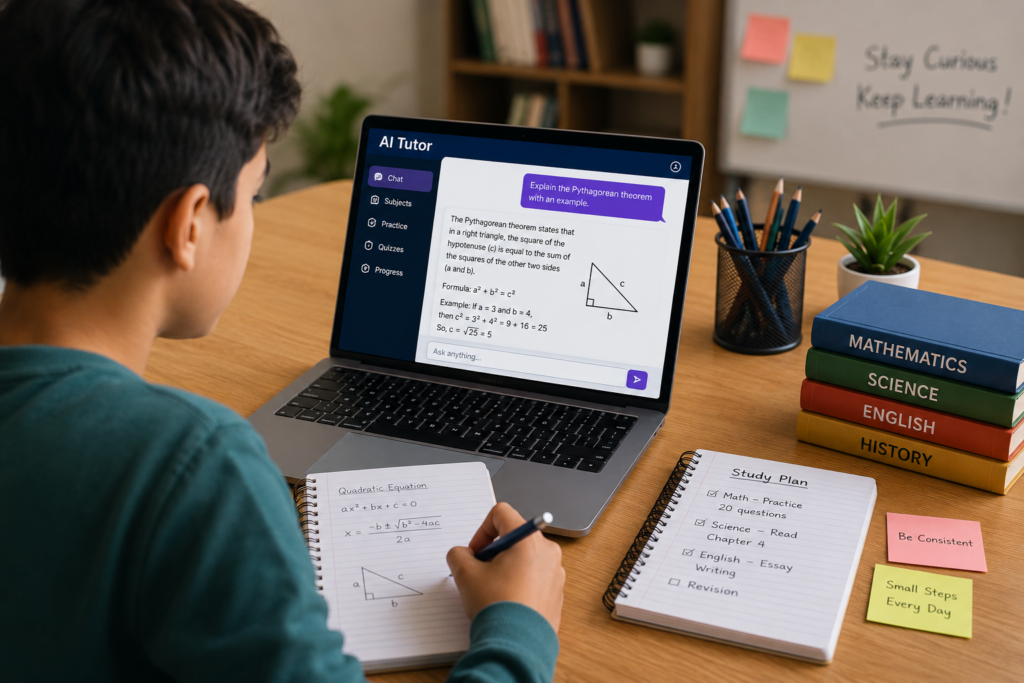
Students no longer have to wait for classroom hours to ask questions. AI chatbots and virtual tutors are available anytime.
Whether it’s solving a math problem at midnight or understanding grammar before an exam, AI tools provide instant support.
3. Better Exam Preparation
AI-based apps can now:
- Create mock tests
- Predict important topics
- Analyze performance
- Suggest improvement areas
This helps students prepare more effectively rather than studying everything blindly.
4. Language and Communication Improvement
Many students use AI to improve:
- English speaking
- Writing skills
- Pronunciation
- Vocabulary
AI tools also help students translate lessons into different languages, making education easier for non-native speakers.
How AI Helps Teachers
Teachers won’t be replaced by AI. Actually, it lessens their workload, allowing them to devote more time to instructing and engaging with pupils.
1. Faster Lesson Planning
Teachers can now use AI tools to:
- Create lesson plans
- Generate quizzes
- Prepare presentations
- Find teaching ideas
This saves hours of manual work.
2. Automated Grading
Checking assignments and tests takes a lot of time. AI can now evaluate:
- Multiple-choice tests
- Basic written answers
- Homework submissions
Teachers can spend more time helping students rather than on repetitive tasks.
3. Student Performance Tracking
AI systems can identify:
- Students who need extra help
- Attendance patterns
- Learning difficulties
- Subject-wise performance
This helps teachers provide better guidance to each student.
4. More Interactive Classrooms
AI-powered smart boards, virtual reality lessons, and interactive learning tools make classes more engaging and less boring.
Students participate more actively when learning becomes visual and practical.
Popular AI Tools Used in Education in 2026
Many schools and students now use AI tools regularly. Some common examples include:
- AI writing assistants
- Virtual tutors
- Smart classroom software
- AI quiz generators
- Speech-to-text tools
- Language learning apps
These tools are helping students learn more efficiently and teachers manage classrooms more effectively.
Benefits of AI in Education
AI offers several advantages in modern education.
- Both students and teachers can complete tasks faster with AI support.
- Personalized learning makes studying more effective.
- Students from remote areas can access quality education online.
- AI tools help organize schedules, revision plans, and assignments.
- Students become more independent learners.
Challenges of AI in Education
Even though AI has many benefits, there are also some challenges.
- Some students rely too much on AI tools for assignments and homework. This can reduce creativity and critical thinking.
- AI tools are not always correct. Sometimes they provide wrong or outdated information.
- Educational platforms collect student data, which raises privacy and security concerns.
- Too much screen-based learning can affect classroom communication and social interaction.
That’s why balance is important.
Tips for Students Using AI
Here are some simple ways students can use AI wisely:
- Use AI for learning, not cheating
- Double-check important information
- Practice writing answers yourself
- Avoid copying AI-generated content directly
- Use AI to understand concepts better
AI should act like a helper, not a replacement for effort.
Tips for Teachers Using AI
Teachers can get the best results from AI by:
- Using AI to save time on repetitive work
- Creating interactive learning experiences
- Monitoring students’ AI usage
- Encouraging critical thinking
- Combining technology with traditional teaching
The human connection between teachers and students will always remain important.
Conclusion
AI in education in 2026 is changing how teachers teach and how students learn. It is making education smarter, faster, and more accessible for everyone. From personalized learning to automated grading, AI is helping improve the education system in many ways. However, using AI responsibly is very important.
The best results happen when technology and human teaching work together. AI should be seen as a learning partner, not a shortcut. As education continues to evolve, students and teachers who learn how to use AI effectively will have a strong advantage in the future.
FAQs
1. How is AI used in education in 2026?
AI is used for personalized learning, virtual tutoring, automated grading, lesson planning, and exam preparation.
2. Can AI replace teachers completely?
No, AI cannot fully replace teachers. Teachers provide emotional support, motivation, and human interaction that technology cannot replace.
3. Is AI good for students?
Yes, AI can help students learn faster, improve weak subjects, and access study support anytime when used responsibly.