


Top online decor choices for eco-conscious Indian homes favor materials like reclaimed wood, jute, and terracotta to minimize indoor toxins. Artisan-made, biodegradable accents, rather than mass-produced plastics, transform urban spaces into visually stunning, healthier environments, support local craft clusters, and enhance air quality.
The Shift Toward Biophilic Design in Indian Urban Apartments
In 2026, the Indian interior design landscape has moved away from “fast decor” toward biophilic principles that connect indoor living with the natural world. For the urbanite in Bangalore or Mumbai, this means replacing synthetic fibers and VOC-heavy laminates with materials that breathe. According to recent insights from Architectural Digest India, incorporating raw textures and living greens is no longer a luxury but a necessity for mental well-being in dense metropolitan environments.
Why Material Integrity Matters for Your Space
Choosing the right decor starts with understanding the product’s lifecycle. Most budget online decor relies on MDF (Medium-Density Fibreboard) and polyester, which off-gas chemicals over time. Sustainable decor focuses on “circularity”—products that can eventually return to the earth without leaving a trace. In high-rise apartments with limited ventilation, these synthetic off-gassings can contribute to “Sick Building Syndrome,” making the switch to natural materials a health-first decision.
The Rise of the “Slow Decor” Movement
This movement emphasizes quality over quantity. Instead of a dozen plastic trinkets, the modern Indian home focuses on one or two statement pieces, such as a hand-carved soapstone platter or a recycled glass vase, which tell a story of heritage and environmental stewardship. By sourcing through platforms that highlight the artisan’s journey, consumers are shifting from mere buyers to patrons of the India Brand Equity Foundation (IBEF)- recognized craft sectors.
Technical Architecture: Engineering a Sustainable Interior
Creating an eco-friendly home requires more than just buying a plant; it involves systematically replacing high-impact materials with low-impact alternatives. To build a truly green home, one must consider the “embodied energy” of their decor—the total energy required to produce and deliver the item to their doorstep.
Understanding Sustainably Sourced Timber
When buying home decor online, seek FSC-certified Mango wood or Sheesham. Mango wood, a fruit industry byproduct, is harvested for furniture after fruiting ends, making it among India’s most sustainable hardwoods. The Ministry of Textiles highlights that supporting these timber cycles keeps craft clusters viable and safeguards old-growth forests.
The Material Science of Natural Fibers
Organic cotton, hemp, and jute are the trifecta of Indian sustainable textiles. Unlike polyester, which traps heat and moisture, natural fibers allow for better airflow. In a tropical climate, using jute rugs and hemp cushion covers can lower a room’s perceived temperature by 2°C to 3°C, reducing reliance on air conditioning. Jute, specifically, is a carbon-sequestering crop; one hectare of jute plants can consume up to 15 tons of carbon dioxide and release 11 tons of oxygen during its short growing season.
Advanced Soil-Based Decor and Humidity Control
Unglazed terracotta and stoneware are porous, allowing them to regulate humidity levels in a room. Traditional Indian pottery, when used as decor or planters, acts as a natural moisture buffer. This is a technical advantage in humid coastal cities where mold growth on synthetic surfaces is a frequent pain point for homeowners. Furthermore, using lime-based washes instead of plastic-based emulsion paints on decorative clay items prevents the release of microplastics into household dust.
Upcycling Metallurgy in Indian Decor
The technical process of upcycling scrap metal into high-end decor involves melting down industrial brass and iron waste, which consumes 60% less energy than mining and refining virgin ores. Artisans in Moradabad and Bastar utilize “Lost Wax” casting methods—a technique dating back to the Indus Valley Civilization—to create intricate figurines and wall hangings that are both culturally significant and environmentally superior to plastic injection-molded alternatives.
Ownership & Economics: The ROI of Sustainable Decor
Investing in high-quality, eco-friendly decor often comes with a higher upfront cost than mass-market plastic alternatives. However, the long-term economic benefits—often referred to as the “Price Per Use”—make it a superior financial decision for the savvy consumer.
Durability and Replacement Cycles
A plastic-bound MDF coffee table has an average lifespan of 3-5 years before the edges chip or the structure warps. In contrast, solid reclaimed wood or metal decor can last for decades. By investing in the best home decor products online that offer heirloom-quality craftsmanship, you eliminate the need for frequent replacements, effectively saving thousands of rupees over 10 years.
Detailed Cost-Benefit Analysis: Sustainable vs. Conventional Decor
| Rug (5×7) | Polyester/Nylon (₹2,500) | Hand-woven Jute (₹6,500) | 10+ Years (Jute) | Lower (Jute lasts 3x longer) |
| Storage Units | Plastic Bins (₹800) | Cane/Wicker Baskets (₹1,800) | 15+ Years | Minimal (Cane is repairable) |
| Wall Art | Vinyl Decals (₹400) | Upcycled Metal/Wood (₹2,500) | Lifetime | Higher value retention |
| Planters | Plastic Pots (₹200) | Terracotta/Ceramic (₹600) | Lifetime | Healthier plants = less replacement |
| Kitchenware | Melamine/Plastic (₹1,500) | Brass/Kansa (₹4,500) | 50+ Years | Massive (Kansa is an investment) |
Resale Value and Asset Retention
Unlike plastic decor, which loses 90% of its value the moment it leaves the store, sustainable materials like brass, copper, and teak wood hold significant resale value. In the growing secondary market for vintage and high-end Indian decor, well-maintained artisanal pieces can often be sold for 50-70% of their original purchase price, whereas synthetic furniture is typically destined for the landfill.
Local Economic Multipliers
Beyond personal savings, purchasing from brands that source from Indian artisans contributes to the national economy. The India Brand Equity Foundation (IBEF) reports that the handicraft sector is a massive employer in rural India. When you buy a hand-loomed rug, a larger percentage of your money stays within the local ecosystem, supporting rural infrastructure and education, compared to buying imported synthetic goods where profit margins exit the country.
Comparative Analysis: Choosing Your Statement Pieces
When navigating online decor shopping, consumers often face a choice between the convenience of global “big-box” retailers and the soul of boutique artisanal brands. Understanding the specifications of each helps in making an informed decision.
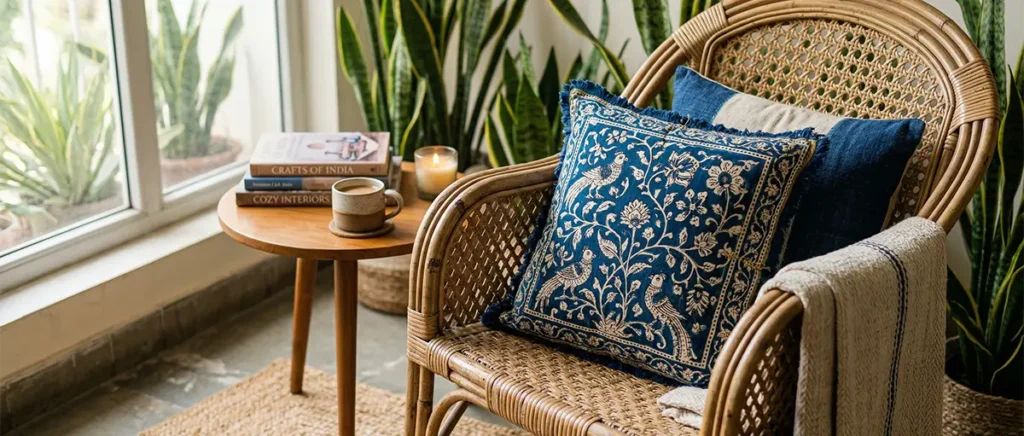
Hand-Blocked Cotton vs. Synthetic Prints
Synthetic prints use heavy-metal dyes that can irritate the skin and harm the environment during washing. Hand-blocked textiles, particularly those dyed with vegetable dyes from regions like Bagru or Sanganeer, offer a unique aesthetic in which no two pieces are identical. While synthetic prints are cheaper, they fade quickly and lack the textural depth of genuine cotton weave.
Recycled Glass vs. Acrylic
Acrylic decor (often marketed as “unbreakable crystal”) scratches easily and yellows over time when exposed to sunlight. Recycled glass, often sourced from old bottles and industrial waste in Firozabad, offers a heavy, premium feel. It is infinitely recyclable and maintains its clarity for a lifetime, making it the superior choice for vases and lighting fixtures.
Natural vs. Synthetic Fillers: The Breathing Test
Most online cushions are filled with polyurethane foam or polyester fiberfill. These materials trap heat and can cause night sweats. Sustainable alternatives like Kapok (Silk Cotton) are naturally hypoallergenic, moisture-wicking, and completely biodegradable. While Kapok cushions may require occasional sunning to maintain loft, their lifecycle impact is negligible compared to petroleum-based foams.
Specification Comparison: Sustainable Accents
| Material Origin | West Bengal (Local) | Industrial Grade Polymers |
| Breathability | High (Prevents odors/mildew) | Zero (Traps moisture) |
| Biodegradability | 100% (Compostable in 1 year) | 0% (Takes 400+ years) |
| Surface Finish | Natural Wax/Oil | Chemical Gloss/Paint |
| Aesthetic Appeal | Organic / Earthy | Industrial / Glossy |
Frequently Asked Questions: Best Home Decor Products Online
Several boutique platforms now specialize in zero-plastic shipping and products. Look for brands that partner directly with craft clusters in Rajasthan and Uttar Pradesh. Marketplaces that offer “Plastic-Free Packaging” filters are your best bet for a truly eco-friendly experience.
Look for certifications such as the VRIKSH Shipping Certificate for wooden items or the Craftmark certification, which ensures the product is made by authentic artisans under fair-wage conditions. Authenticity can also be verified by checking for G.I. (Geographical Indication) tags on products like Blue Pottery or Dhokra Art.
Opt for Kapok (Ilavam Panju) or organic cotton fillers. For the covers, linen or hemp provides a cooling effect that is perfect for the fluctuating Bangalore weather, where afternoons can be warm despite a cool morning.
The Snake Plant (Sansevieria) and ZZ Plant are top choices. They require minimal water and, according to NASA studies, are scientifically proven to remove toxins like benzene and formaldehyde from indoor air.
Specialized lifestyle e-commerce sites often feature “Upcycled” categories. Look for wrought iron or brass work from Bastar or Moradabad, which often uses recycled scrap metal to create intricate designs that serve as focal points in modern living rooms.