

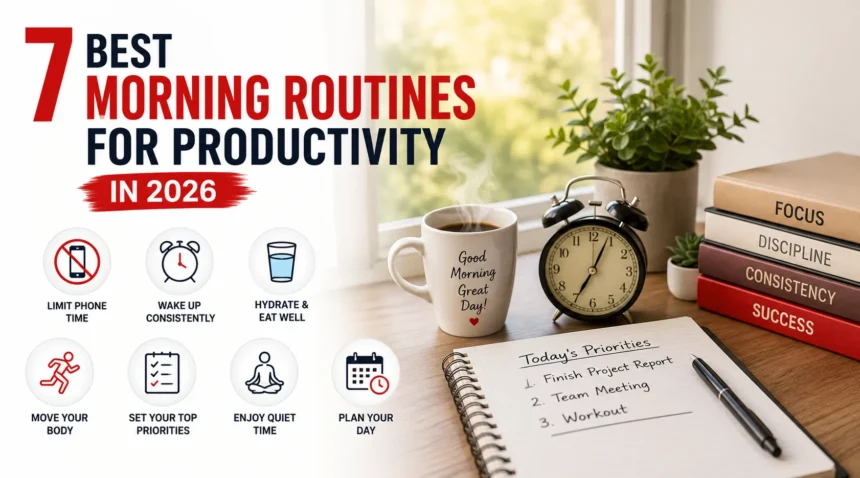
Do your mornings usually begin with a rushed alarm, a quick scroll through your phone, and the feeling that you are already behind? You are not alone.
The way you spend the first hour of your day can have a surprising effect on how the rest of it feels. A good morning routine does not have to involve waking up at 5 a.m. or following a complicated schedule.
In 2026, the best routines are practical, flexible, and designed around your actual lifestyle. Here are seven simple morning routines that can help you feel more focused, organized, and ready for the day.
List Of 7 Best Morning Routines For Productivity In 2026
Want to make your mornings feel less rushed and get more done during the day? Check out these 7 best morning routines for productivity in 2026 and find a routine that actually fits your lifestyle.
1. Start Your Morning Without Your Phone
For many people, the phone is the first thing they reach for after waking up. One quick look at social media can easily turn into 20 minutes of scrolling through messages, news, videos, and notifications. Before you know it, your morning has started with everyone else’s priorities instead of your own.
Try keeping your phone away from your bed and giving yourself some screen-free time after waking up. You do not have to avoid it for hours. Even 20 to 30 minutes without notifications can give you enough quiet time to decide what you actually want to accomplish that morning.
2. Wake Up at a Consistent Time
You do not need to wake up extremely early to be productive. In fact, getting enough sleep is far more useful than forcing yourself out of bed at an unreasonable hour. A consistent wake-up time can help create a predictable rhythm, making mornings feel less chaotic.
Try to wake up around the same time on most days, including weekends where practical. Once your body becomes familiar with the schedule, getting out of bed can feel easier. The goal is not to become a “5 a.m. person” just because someone online says you should be. Your routine needs to work for you.
3. Drink Water and Have a Proper Breakfast
After several hours of sleep, starting your morning with some water is a simple habit that can help you feel refreshed. It is also an easy way to create a small pause between waking up and jumping into work or other responsibilities.
Breakfast is another area where there is no universal rule. Some people feel better eating soon after waking up, while others prefer eating later. If you do have breakfast, choose something that keeps you satisfied rather than relying entirely on sugary foods or several cups of coffee. A simple meal can be enough to get your morning moving.
4. Move Your Body for 15 to 30 Minutes
You do not need a full gym session to make movement part of your morning. A short walk, stretching session, yoga routine, cycling session, or quick home workout can help you transition from sleep into an active part of your day. The biggest advantage is consistency. A 20-minute activity you actually enjoy is much easier to maintain than an intense workout you constantly avoid. If you work at a desk, morning movement can also be a useful way to get away from your screen before spending several hours sitting later in the day. Some simple options include:
- Taking a brisk morning walk
- Doing basic stretching or yoga
- Following a short home workout
- Cycling around your neighborhood
- Dancing to a few favorite songs
5. Write Down Your Top Three Priorities
A long to-do list can make your morning feel productive while actually making it harder to decide where to start. Instead of writing down everything you need to do, choose three priorities that genuinely matter that day. These could be work-related tasks, personal responsibilities, or something as simple as completing an important appointment. Once your three priorities are clear, you have a direction for the day. Smaller tasks can still be handled later, but they do not need to compete with your most important work. A simple morning priority list could look like this:
- Finish the important work project.
- Attend the scheduled meeting.
- Spend 30 minutes on personal learning.
This approach also makes it easier to recognize progress. Even if the rest of your day becomes unpredictable, completing your three main tasks can leave you feeling that you accomplished something meaningful.
6. Spend a Few Minutes Planning Your Day
Once you know your priorities, take a few minutes to look at your schedule. Check meetings, appointments, deadlines, travel time, and anything else that could affect your day. This small habit can prevent unpleasant surprises later.
Try not to schedule every minute. Leaving some empty space is important because unexpected tasks will almost always appear. A productive morning is not about creating a perfect timetable that collapses the moment something changes. It is about knowing what needs your attention and having enough flexibility to deal with whatever comes up.
7. Give Yourself Some Quiet Time
Productivity is not only about doing more. Sometimes, starting your morning slowly can help you think more clearly. Spend five or ten minutes sitting quietly, journaling, reading a few pages of a book, meditating, or simply enjoying your coffee without checking your notifications.
This can be especially useful if your days are usually filled with messages, meetings, family responsibilities, and constant digital noise. You do not need a complicated mindfulness routine. The idea is simply to give your brain a little breathing room before the day’s demands begin.
Build a Routine You Can Actually Follow
One mistake people make when creating a morning routine is trying to change everything at once. They wake up early, exercise, meditate, journal, read, prepare a complicated breakfast, plan their day, and avoid their phone. It sounds impressive for about three days. Then real life happens.
Instead, choose two or three habits that feel realistic. Once they become comfortable, add another one if you want. A useful morning routine should make your life easier rather than feel like another job you have to complete before work.
Your Morning Routine Does Not Have to Look Perfect
Social media can make productivity look surprisingly glamorous. You may see people waking before sunrise, exercising for an hour, writing in beautiful journals, drinking elaborate smoothies, and completing half their day’s work before 8 a.m. That may work for some people, but it is not a requirement for having a productive morning.
Your routine might be much simpler. Maybe you wake up at 7:30, drink water, take a short walk, have breakfast, and spend ten minutes planning your priorities. If that helps you start your day feeling calm and prepared, it is a good routine. Productivity is personal, and there is no prize for making your morning unnecessarily difficult.
Avoid These Common Morning Routine Mistakes
A morning routine should support your day, not control it. If you constantly feel stressed because you cannot complete every part of your routine, it may be time to simplify it. Missing one morning does not mean you have failed. Try to avoid habits such as:
- Creating an unrealistic schedule
- Sacrificing sleep to wake up earlier
- Checking work messages immediately
- Making your routine too complicated
- Comparing your mornings with people online
- Treating one missed day as a failure
The most effective routine is usually the one you can repeat without constantly fighting against your lifestyle.
Make Technology Work for Your Morning
Technology can either distract you or make your morning easier. The difference comes down to how intentionally you use it. Instead of immediately opening social media, use your phone for things that genuinely help you get organized.
Calendar apps, reminders, weather updates, fitness trackers, meditation apps, and digital planners can all have a useful place in a morning routine. The trick is to avoid opening one useful app and somehow ending up watching 45 minutes of random videos. Set boundaries around your screen time and decide what you want to use technology for before you pick up your phone.
Create a Routine That Changes With Your Life
Your morning routine does not need to stay exactly the same throughout the year. Your work schedule, health goals, family responsibilities, travel plans, and personal priorities can all change. A routine that works perfectly today may not make sense six months from now.
Think of your routine as a flexible framework rather than a strict list of rules. On busy mornings, you might only have time for water, breakfast, and your top priority. On quieter days, you might have time for exercise, reading, and planning. Both versions can be productive.
Final Thoughts
A productive morning is not about squeezing as many tasks as possible into the first few hours of the day. It is about creating a start that helps you feel prepared rather than rushed. Whether that means exercising, planning your priorities, staying away from your phone, or simply enjoying a quiet cup of coffee, small habits can make a noticeable difference when you follow them consistently. The seven routines above are a starting point, not a strict formula. Pick the ones that fit your lifestyle and leave the rest. In 2026, productivity is less about doing everything perfectly and more about using your time and attention intentionally. Start with one simple change tomorrow morning and see how it feels.
For more healthcare details, make sure to check out this website.
FAQ
1. What is the best morning routine for productivity?
A. There is no single morning routine that works for everyone. A productive routine can include enough sleep, some movement, a healthy breakfast, limited screen time, and a clear list of the day’s most important tasks. The key is choosing habits you can follow consistently.
2. How early should I wake up to be productive?
A. You do not need to wake up extremely early to have a productive day. Getting enough quality sleep is more important than waking up at a specific time. Choose a wake-up time that fits your schedule and allows you to feel rested.
3. How long should a morning routine last?
A. A morning routine can be as short as 15 to 20 minutes or last an hour or more. There is no fixed duration. Focus on a few useful habits that help you feel prepared for the day rather than trying to fill every available minute.