

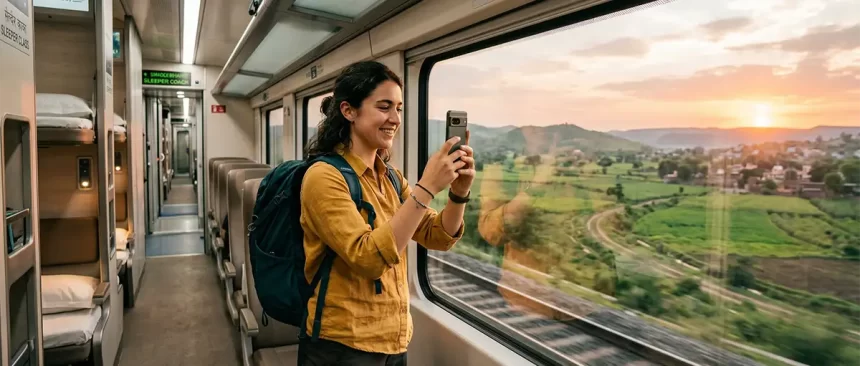
Forget survival mode. In 2026, solo travel in India means chasing Wi-Fi, color, and real value. You want a bed, a signal, and a meal for under ₹1,500? Easy. Ride the new Vande Bharat Sleepers. Use the Purvodaya routes. You’ll move fast, sleep cold, and wake up somewhere new—no stress, no scams.
Last Updated: March 2026.
Disclosure: Budget estimates are based on 2026 inflation-adjusted averages for hostels (₹400–800), local transport (UPI-integrated), and street food (₹400–600/day).
Update Cadence: Monthly verification of hostel rates and updates to the Vande Bharat schedule.
Why Now? The 2026 “Viksit” Travel Revolution
Here’s the shift: India just poured money into trains and temples. Seven new high-speed rail lines. Heritage sites are getting real attention. The government wants you to travel–so take advantage.
The launch of the Vande Bharat Sleeper in January 2026 – starting with the Guwahati-Kolkata (Kamakhya-Howrah) route – has redefined budget travel. These trains allow you to cover 1,000km overnight in AC comfort for roughly ₹2,300, effectively saving you the cost of a hotel night while moving you across the country at 160 kmph.
The 2026 Real-Cost Index: Daily Budget Breakdown
Want to stay under ₹1,500 a day? Go digital. Pay with UPI. Track every rupee. Here’s what you’ll spend, line by line.
| A-Rated Hostel Dorm | ₹450 – ₹850 | Free 5G + Digital Lockers |
| Local Meals (3x) | ₹400 – ₹600 | UPI 3.0 Tap-and-Pay |
| Transport (Metro/e-Auto) | ₹150 – ₹300 | One Nation One Card |
| Sightseeing/Data | ₹200 – ₹400 | Digital Knowledge Grid Access |
| TOTAL | ₹1,200 – ₹2,150 | ~$14 – $25 USD |
1. Rishikesh, Uttarakhand: The “Astro-Nomad” Capital
Start in Rishikesh. It’s not just yoga mats and chai anymore. In 2026, you’ll find telescopes on rooftops and new forest trails. The air smells like incense and river mud.
- Safety: Rated 5/5 for solo women due to the high density of “verified” hostels like Zostel and The Hosteller.
- Budget Hack: Use the “Seva-Stay” model in local ashrams. By contributing 2 hours of community service, you can often secure free satvic meals and basic lodging.
- Must-Do: Walk to Neer Garh waterfall. It’s free. Cold spray on your face, moss under your shoes. Bring your camera, but don’t just stare at the screen.
2. Varanasi, Uttar Pradesh: Spiritual Tech Hub
Take the Delhi-Varanasi high-speed train. Eight hours, not eighteen. You’ll step off into a city that smells like marigolds and wood smoke.
- The Experience: Skip the old checklist. Walk through fifteen new archaeological sites. Touch sandstone, hear temple bells, dodge cows. These places are open now–go before the crowds catch on.
- Cost: Street food in Varanasi remains incredibly cheap. A full Kachori-Sabzi breakfast still costs under ₹60.
3. Hampi, Karnataka: The UNESCO Slow-Travel Gem
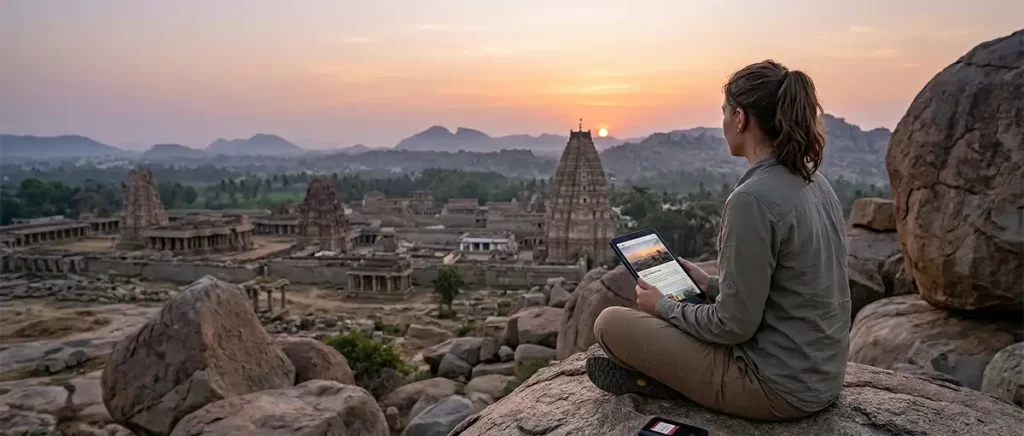
Go to Hampi. The stones are ancient, but your signal is strong. In 2026, you can upload reels from a boulder at sunset.
- Daily Cost: Verified at ₹800–₹1,200.
- Transport: Rent a moped for ₹300/day. The new electric shuttle circuit between the Vittala Temple and the Royal Centre is nearly free for “One Nation Card” holders.
4. Udaipur, Rajasthan: Royal Heritage on a Shoestring
Land in Udaipur. Forget five-star hotels. The real scene is rooftop hostels, chai in hand, city lights below. Dorm beds start at ₹500.
- Safety: The Udaipur Tourist Police are highly active on the Suraksha App, providing 24/7 assistance for solo travelers.
- Aesthetic Value: Climb to a rooftop hostel in the Old City. Sip coffee. Watch the lake turn gold at sunset. You’ll pay less than a movie ticket.
5. Gokarna, Karnataka: The Sustainable Beach Alternative
Skip North Goa. Go to Gokarna. The sand is quieter, the air smells like salt and bonfires. No club noise, just waves.
- The Vibe: It’s about “Turtle Trails” (a 2026 Budget initiative) and sustainable beach trekking.
- Budget Tip: Sleep in a shack on Half Moon Beach. ₹600 a night. No Wi-Fi, just the sound of crickets and the sea.
The “Purvodaya” Push: Exploring the New Frontier
The Purvodaya (Rise of the East) initiative in the 2026 Budget has allocated specific funds for five new tourism destinations in Bihar, Jharkhand, West Bengal, Odisha, and Andhra Pradesh.
6. Odisha: The Turtle and Temple Trail
Odisha is the surprise of 2026. Ride a river ferry on National Waterway 5. You’ll see kingfishers, not crowds.
- Must-Visit: Walk the Turtle Nesting Trails. Go at dawn. Sand under your feet, turtle tracks in the dark. Entry is cheap, memories aren’t.
7. Sikkim & Arunachal: The Buddhist Circuit
Head northeast for the Buddhist Circuit. New roads, easier buses, and hot chai at every stop. Monasteries feel closer now.
- Access: Book the Guwahati-Kolkata Vande Bharat Sleeper. Under ₹2,500. You’ll wake up at the edge of the Northeast, ready to move.
How to travel across India on a budget of ₹1,500 per day?
Want to hit ₹1,500 a day? Here’s how: Ride the Amrit Bharat Express—cheaper than Vande Bharat, no seat drama. Eat thali at Jan Ahaar counters for ₹80. Book a Nomad Pass at a hostel chain. Stay 15 days, pay ₹350 a night. No guesswork.
Safety and Technology: The 2026 Toolkit
Solo travel is safer in 2026 due to the National Destination Digital Knowledge Grid. This platform allows you to:
- Verify Guides: Only hire one of the 10,000 IIM-trained guides sanctioned in the 2026 Budget.
- Live Location Sharing: The Suraksha App is now mandatory for high-risk treks in Himachal and Uttarakhand, ensuring the SDRF (State Disaster Response Force) can find you within minutes.
Expert Insights on 2026 Trends
“The integration of UPI 3.0 into every village-level homestay has removed the ‘cash anxiety’ for solo travelers,” says the Ministry of Tourism’s 2026 Data Compendium. Experts at Outlook Traveller note that the reduction in TCS (Tax Deducted at Source) on domestic packages has made local “Glow-cations” far more attractive than budget trips to Southeast Asia.
10 Quick Hacks for the 2026 Budget Traveler
- One Nation One Card: Load it! It works on metros, buses, and even some heritage site entries.
- Vande Bharat “Early Nomad” Fares: Book 20 days out for 20% off.
- The “Glow-cation” Kit: 5G is everywhere; carry a high-capacity power bank as your primary safety tool.
- Avoid “Tourist Taxes”: In 2026, use AI-price checkers to scan menus; if it’s not on the digital UPI menu, don’t pay.
- Free Walking Tours: Most Tier-2 cities now have IIM-intern-led walking tours funded by the 2026 “Guide Upskilling” pilot.
- Slow Travel Discounts: Hostels in 2026 favor the “long-stay.” Stay 7 days, get 2 free.
- Off-Peak Connectivity: Travel on Tuesdays or Wednesdays; rail congestion is 40% lower.
- Digital Document Vault: Use the DigiLocker for your ID; 2026 hotels are legally required to accept it.
- BYO Water: Use the new “Amrit Sarovar” high-filtration taps at stations to save ₹100/day on bottled water.
- Emergency Contact: Dial 112 or use the “Panic Button” on the Suraksha app—the response time is now under 12 minutes in tourist zones.
Frequently Asked Questions: Budget Solo Travel India 2026
Is solo travel in India safe for female beginners in 2026?
Yes. The 2026 Safety Audit by StayVista shows a 40% improvement in safety perceptions thanks to the 24/7 “Tourist Friend” police presence in 20 iconic destinations.
What is the “Purvodaya” scheme for travelers?
It’s a regional development push for Eastern India. For travelers, it means 5 new integrated tourism destinations in states like Bihar and Odisha, served by 4,000 new e-buses.
How much does a 1-week solo trip cost in India?
A well-planned “Budget-Nomad” week costs roughly ₹12,000–₹15,000 ($145–$180), covering all essentials, transport, and 5G connectivity.
What is the “3-2-1 Rule” for staying under budget?
To maintain a ₹1,500 daily limit, travelers use the 3-2-1 Rule: Eat 3 local street food meals, use 2 shared e-auto/bus rides, and book 1 pre-verified hostel dorm bed.
Can I use my “One Nation One Card” for everything?
Yes, in 2026, this card is integrated for all Metro systems, state-run buses, and entry fees for 15+ major archaeological sites, saving you up to 15% on individual tickets.
What are the new “Vande Bharat Sleeper” routes for budget travelers?
The primary 2026 route is Guwahati-Kolkata (Kamakhya-Howrah). Additional routes include Delhi-Varanasi and Mumbai-Pune-Hyderabad, which function as overnight moving hotels to save on lodging costs.
Do I need cash in rural India in 2026?
Rarely. With UPI 3.0, even remote tea stalls and homestays in the Northeast or Western Ghats accept digital payments. However, keeping ₹500 in small change for remote “shadow zones” without 5G is still advised.