

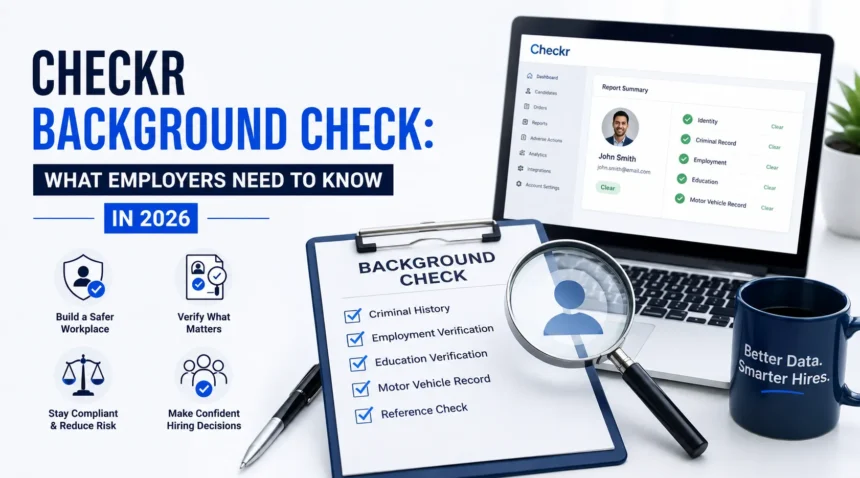
Are you confident that your hiring process gives you the information you need without making things unnecessarily complicated? Background checks have become an important part of recruitment for many employers, particularly for roles involving sensitive information, driving, finances, or regulated responsibilities.
In 2026, employment screening is about more than checking criminal records. Employers are also thinking about identity verification, compliance, accuracy, hiring fraud, and candidate experience.
A platform such as Checkr brings many of these elements together through a technology-driven background screening process.
What Is a Checkr Background Check?
A Checkr background check is an employment screening process that allows employers to review relevant information about job candidates. Checkr operates as a consumer reporting agency, and the information included in a report depends on the screenings selected, the role, location, applicable laws, and other requirements. Depending on the situation, screening may involve criminal records, employment history, education, driving records, or other relevant information.
There is no single background check that works for every position. A company hiring a delivery driver may have very different screening requirements from one hiring an accountant or healthcare professional. Employers generally need to consider the responsibilities and risks associated with each role when creating their screening process. This helps make background checks more relevant instead of treating every candidate and position exactly the same.
What Can a Checkr Background Check Include?
The information included in a Checkr background check depends on the screening package selected by an employer. Criminal background searches can look at records across different jurisdictions, while other screenings can help verify information supplied by candidates. The purpose is generally to provide employers with relevant information that can be considered alongside the rest of the hiring process. Depending on the role and employer requirements, screenings may include:
- Criminal background checks
- Employment verification
- Education verification
- Motor vehicle record checks
- Professional license verification
- Credit checks where legally permitted
- Identity-related searches
- Global watchlist searches
- Drug testing where applicable
Not every employer needs every type of screening. For example, motor vehicle record checks can be relevant to driving positions, while professional license verification may matter for regulated jobs. The appropriate screening depends on the position and applicable requirements.
How Does the Checkr Background Check Process Work?
For employers using Checkr, the process generally starts with setting up and credentialing an account. Employers can select a candidate, provide relevant job and location information, choose a screening package, and send the candidate an invitation. Location can be important because employment screening laws and requirements may differ between states and local jurisdictions.
Once candidates receive an invitation, they provide the information required for the selected screenings. Checkr provides a digital experience that allows candidates to complete the required steps and check the status of their report. This can reduce some of the manual communication involved in traditional screening while giving candidates more visibility into where their background check stands.
How Long Does a Checkr Background Check Take?
There is no fixed timeframe for every Checkr background check. The time required can depend on the types of screenings ordered, the jurisdictions involved, record availability, and whether additional information needs to be verified. Some searches may return results quickly, while others can take longer because additional research is required.
Employers should therefore avoid assuming that every background check will be completed within the same timeframe. Checkr states that employment background checks commonly take around three to five business days, although individual reports may take longer. Building some flexibility into the hiring timeline can help employers avoid unnecessary pressure when a search requires additional verification.
Understanding Checkr Background Check Statuses
If you have never worked with background screening before, terms such as “Clear,” “Complete,” and “Consider” can be confusing. A report marked “Complete” generally means that the relevant search has finished. It does not necessarily indicate a particular hiring outcome. “Clear” generally means the report did not return information requiring further review under the employer’s established criteria.
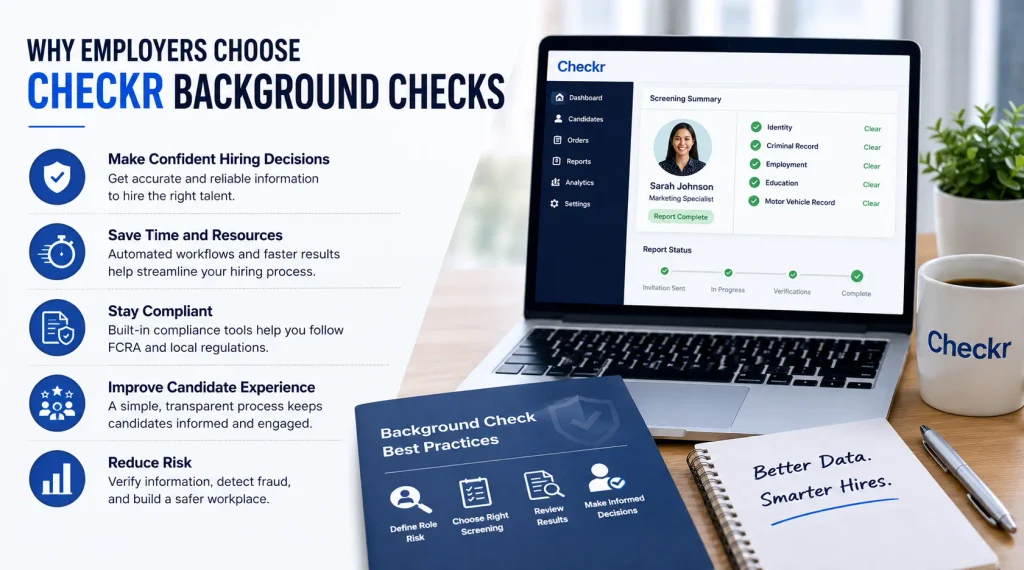
A “Consider” status can indicate that information has been returned that may need additional review. This does not automatically mean that a candidate should be rejected. Employers need to consider the information in context, follow their established procedures, and comply with applicable laws. Candidates may also have rights to dispute information they believe is inaccurate or incomplete.
Why Background Check Compliance Matters in 2026?
Employment background checks involve sensitive personal information, making compliance an important consideration for employers. In the United States, the Fair Credit Reporting Act establishes requirements for employers and consumer reporting agencies involved in employment screening. Employers generally need to provide appropriate disclosures and obtain authorization before ordering a consumer report.
State and local laws can create additional requirements. Rules around criminal history, timing, disclosures, and fair hiring can vary depending on where an employer operates. Because these requirements can change, employers should not rely solely on general online information when making compliance decisions. Legal or professional guidance may be appropriate when developing or reviewing a screening process.
What Happens When a Report Contains Negative Information?
A background report can sometimes contain information that requires additional review. Employers should avoid treating a single record as an automatic hiring decision because the relevance and context of information can vary. The employer’s established screening policy, the position involved, applicable laws, and the details of the record can all be important.
Checkr provides information that can help employers review reported records, including details such as jurisdictions, charge types, offense dates, and dispositions when available. Candidates may also have an opportunity to dispute inaccurate information. Having a consistent process for reviewing reports can help employers handle screening results more carefully and consistently.
Why Identity Verification Matters More in 2026?
The hiring landscape has changed significantly with the growth of artificial intelligence. AI-generated resumes, manipulated documents, deepfakes, and other forms of digital deception have created new concerns for recruitment teams. Employers are increasingly considering how they can verify that candidates are who they claim to be and that important information supplied during hiring is genuine.
This does not mean employers should approach every applicant with suspicion. Instead, it highlights the importance of having reliable processes for verifying relevant information. Identity verification can become another part of a broader screening strategy, particularly for roles where identity, credentials, or access to sensitive systems are especially important.
How Checkr Fits Into Modern Hiring?
Background screening was once heavily dependent on manual processes, emails, paperwork, and repeated follow-ups. Today, employers increasingly expect recruitment technology to connect different parts of the hiring process. Checkr uses technology and automation to help streamline parts of background screening and provide employers with a centralized way to manage reports.
For hiring teams, this can reduce some administrative work and make it easier to monitor screening progress. Automated updates and digital workflows can also help employers and candidates understand what is happening without relying on constant back-and-forth communication. The goal is to make screening fit more naturally into the overall recruitment process.
Creating a Consistent Screening Process
Employers should consider their screening process carefully before running background checks. A clear background check policy can explain which positions require screening, what types of checks may be used, when screening takes place, and how results are reviewed. Having documented procedures can also help organizations apply their process more consistently. A screening policy may cover areas such as:
- Positions subject to background checks
- Types of screening used for different roles
- Candidate authorization and disclosures
- Review procedures for screening results
- Candidate dispute processes
- Applicable legal requirements
- How screening policies are updated
A consistent approach can make the process easier for hiring teams to manage while giving candidates a clearer understanding of what to expect.
The Candidate Experience Matters
It can be easy for employers to focus entirely on the information a background check provides and forget about the candidate experience. Applicants may feel uncomfortable sharing personal information if they do not understand why it is being requested or what will happen afterward. Clear communication can make the process feel more straightforward.
A digital screening process can give candidates access to instructions and status updates while they complete the required steps. Employers can also explain why screening is part of the hiring process and communicate what candidates should expect. A smoother experience can make background screening feel like a normal part of recruitment rather than an unexpected obstacle.
Final Thoughts
A Checkr background check in 2026 is about more than simply reviewing a candidate’s criminal history. Modern screening can include employment and education verification, driving records, identity checks, and other searches depending on the role and employer’s requirements. For employers, the focus should be on creating a screening process that is consistent, relevant, accurate, and aligned with applicable laws. Technology can make background screening easier to manage, but thoughtful hiring practices still matter.
For more technology details details, make sure to check out this website.
FAQ
1. How long does a Checkr background check take?
A. The timeframe varies depending on the screenings ordered, locations involved, record availability, and whether additional research is needed. Some checks may be completed quickly, while others can take longer. Employers should allow reasonable flexibility when planning their hiring timelines.
2. What does a Checkr background check show?
A. A report can contain different types of information depending on the screenings selected by an employer. These may include criminal records, employment verification, education verification, driving records, professional licenses, and other relevant searches. Not every report includes all of these checks.
3. Does a “Consider” result mean a candidate will not be hired?
A. No. A “Consider” result generally means information has been returned that may require further review. It does not automatically determine the hiring outcome. Employers should follow their established procedures and applicable laws when reviewing information in a background report.