

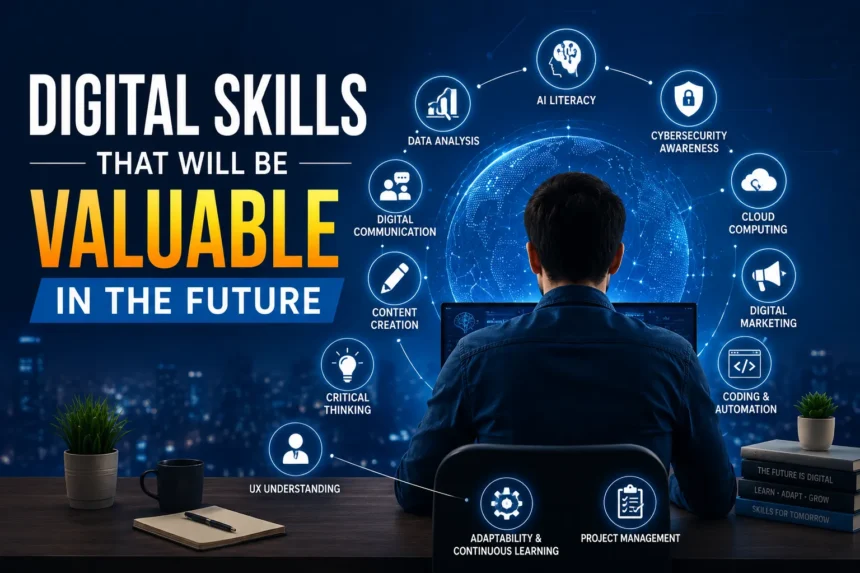
Technology is changing the way we work, learn, and communicate faster than ever before. Many jobs that exist today will evolve significantly in the coming years, while entirely new career opportunities will emerge. Whether you are a student, a working professional, or someone planning a career change, developing the right digital skills can help you stay competitive in an increasingly technology-driven world.
The good news is that you do not need to be a software engineer to benefit from digital skills. From data analysis and artificial intelligence to digital communication and cybersecurity awareness, these skills are becoming essential across almost every industry.
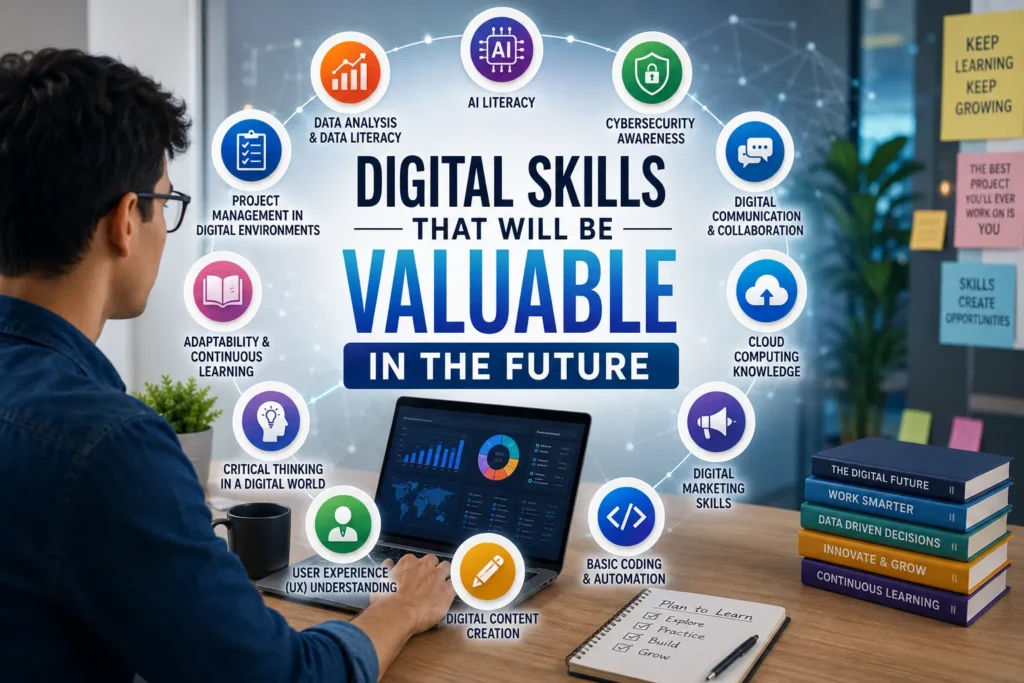
Here are some of the most valuable digital skills that are likely to shape the future of work.
1. Artificial Intelligence (AI) Literacy
Artificial intelligence is no longer limited to tech companies. Businesses in healthcare, education, finance, retail, and manufacturing are using AI tools to improve efficiency and decision-making.
AI literacy means understanding how AI works, what it can do, and how to use it responsibly. You do not necessarily need to build AI models yourself, but knowing how to work with AI-powered tools can make you more productive.
Key areas to learn include:
- AI-powered productivity tools
- Generative AI platforms
- AI ethics and responsible use
- Prompt writing and optimization
- Understanding AI limitations
As AI becomes more common in workplaces, employees who can effectively collaborate with AI tools will have a significant advantage.
2. Data Analysis and Data Literacy
Data has become one of the world’s most valuable resources. Companies collect large amounts of information and rely on data to make business decisions.
Data literacy involves the ability to read, understand, interpret, and communicate data effectively.
Important skills include:
- Spreadsheet management
- Data visualization
- Basic statistics
- Business analytics
- Data storytelling
Professionals who can turn raw information into meaningful insights are highly valued across industries. Even non-technical roles increasingly require a basic understanding of data.
3. Cybersecurity Awareness
As more services move online, cyber threats continue to grow. While cybersecurity specialists are in high demand, every employee benefits from understanding digital security fundamentals.
Cybersecurity awareness includes:
- Recognizing phishing attacks
- Password management
- Safe online practices
- Data protection
- Privacy awareness
Organizations increasingly seek workers who can help maintain a secure digital environment. Even basic cybersecurity knowledge can reduce risks for both individuals and businesses.
4. Digital Communication and Collaboration
Remote and hybrid work environments have transformed workplace communication. Employees now collaborate with colleagues, clients, and teams located around the world.
Future-ready communication skills include:
- Virtual meeting management
- Online presentation skills
- Professional digital communication
- Collaborative project management
- Remote teamwork
Being able to communicate clearly through digital channels is becoming just as important as face-to-face communication.
5. Cloud Computing Knowledge
Many businesses now rely on cloud-based platforms rather than traditional on-site infrastructure. Understanding cloud technology can open doors to numerous career opportunities.
Useful cloud-related skills include:
- Cloud storage management
- Cloud collaboration tools
- Understanding cloud security
- Basic cloud platform knowledge
- Digital workflow optimization
You do not need advanced technical expertise to benefit from cloud computing knowledge. Even basic familiarity with cloud systems can improve workplace efficiency.
6. Digital Marketing Skills
Businesses increasingly depend on digital channels to reach customers. As a result, digital marketing remains one of the most valuable and versatile skills in the modern workforce.
Important areas include:
- Search engine optimization (SEO)
- Content marketing
- Social media marketing
- Email marketing
- Paid advertising
- Analytics and performance tracking
Digital marketing skills can benefit entrepreneurs, freelancers, content creators, and corporate professionals alike.
7. Basic Coding and Automation
Not everyone needs to become a software developer, but understanding basic coding concepts can be extremely useful.
Learning simple programming and automation skills can help professionals:
- Automate repetitive tasks
- Improve productivity
- Understand technical systems
- Work more effectively with developers
Popular beginner-friendly options include:
- Python
- HTML and CSS
- JavaScript basics
- No-code and low-code platforms
Automation is expected to play an increasingly important role in future workplaces, making these skills highly relevant.
8. Digital Content Creation
The demand for online content continues to grow across websites, social media platforms, podcasts, and video channels.
Digital content creation involves:
- Writing and blogging
- Video production
- Graphic design
- Podcasting
- Visual storytelling
Companies and personal brands need engaging content to attract audiences and build trust. Creative professionals with digital production skills will continue to find opportunities across industries.
9. User Experience (UX) Understanding
User experience focuses on creating products, websites, and applications that are easy and enjoyable to use.
Even professionals outside design roles can benefit from understanding UX principles.
Key concepts include:
- User-centered design
- Accessibility
- Customer journey mapping
- Website usability
- Interface evaluation
Businesses that prioritize user experience often achieve higher customer satisfaction and stronger brand loyalty.
10. Critical Thinking in a Digital World
Technology provides access to enormous amounts of information, but not all information is accurate or reliable.
Future professionals will need strong critical-thinking abilities to:
- Evaluate online sources
- Verify information
- Identify misinformation
- Analyze digital content objectively
- Make informed decisions
As AI-generated content becomes more common, the ability to assess credibility will become increasingly valuable.
11. Adaptability and Continuous Learning
One of the most important digital skills may not be technical at all. Technology evolves rapidly, and professionals must continuously update their knowledge.
Successful individuals often:
- Learn new tools regularly
- Stay informed about industry trends
- Embrace change
- Develop problem-solving abilities
- Pursue ongoing professional development
Employers increasingly value workers who demonstrate curiosity and a willingness to learn.
12. Project Management in Digital Environments
Modern organizations rely heavily on digital project management tools to coordinate work and achieve goals efficiently.
Useful skills include:
- Task planning
- Team coordination
- Workflow management
- Resource allocation
- Agile methodologies
Understanding how digital projects are managed can improve productivity and leadership potential across various industries.
How to Start Building Future-Ready Digital Skills
Developing digital skills does not require a large financial investment. Many high-quality learning resources are available online, including free courses, tutorials, webinars, and professional certification programs.
A practical approach is to:
- Identify skills relevant to your career goals.
- Focus on one skill at a time.
- Practice through real-world projects.
- Build a portfolio of your work.
- Stay updated with industry developments.
Consistency matters more than speed. Even dedicating a few hours each week to learning can lead to significant growth over time.
Final Thoughts
The future workplace will be shaped by technology, automation, artificial intelligence, and digital transformation. While specific tools and platforms may change, certain digital skills will remain valuable because they help people adapt, solve problems, and work effectively in modern environments.
From AI literacy and data analysis to cybersecurity awareness and digital communication, investing in these skills today can create more opportunities tomorrow. The professionals who thrive in the future will not necessarily be those who know every technology, but those who are willing to learn, adapt, and grow alongside it.
By developing these future-focused digital skills now, you can position yourself for long-term success in an increasingly digital world.
FAQs
1. What are digital skills?
Digital skills are the abilities needed to use technology effectively for work, learning, communication, and problem-solving. Examples include data analysis, digital communication, cybersecurity awareness, coding, and digital marketing.
2. Which digital skill is most important for the future?
There is no single most important skill, but AI literacy, data analysis, cybersecurity, and digital communication are expected to be among the most valuable as technology continues to evolve.
3. Do I need coding skills to succeed in the digital age?
Not necessarily. While basic coding knowledge can be helpful, many careers benefit more from skills such as digital marketing, data literacy, project management, content creation, and AI tool usage.