

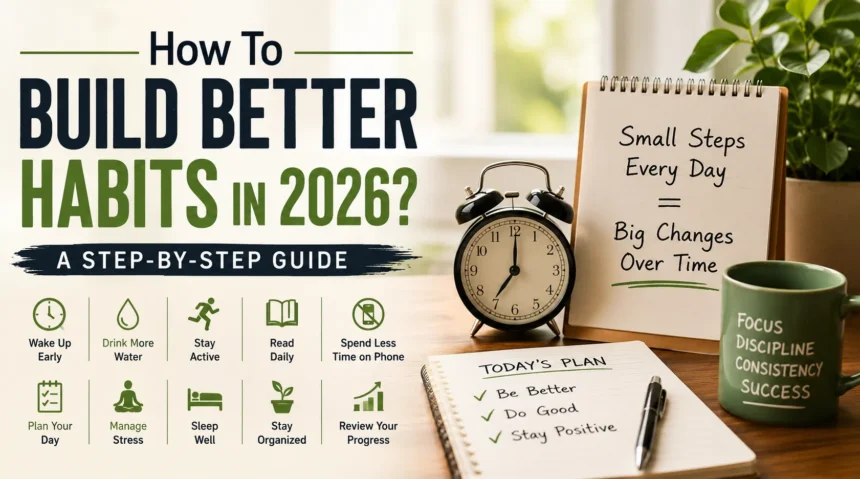
Have you ever decided to wake up early, exercise every day, read more books, or spend less time on your phone, only to give up after a few days? You are definitely not the only one. Building better habits sounds simple, but staying consistent can be difficult when life gets busy.
The good news is that you do not need to completely change your lifestyle to become more productive or healthier. Small changes can make a big difference when you repeat them regularly. In 2026, when our days are filled with work, social media, notifications, and endless distractions, simple habits can help us stay focused and make better use of our time.
How To Build Better Habits In 2026? 10 Working Tips
The key is to start small, keep your goals realistic, and give yourself enough time to adjust. Here are 10 habits that can help you build a better routine in 2026. Read The Complete Article To Get Complete Information On Building Better Habits In 2026.
1. Wake Up At A Consistent Time
You do not have to wake up at 5 a.m. to have a productive morning. What matters more is creating a consistent sleep and wake-up schedule that works for your lifestyle. Try to wake up around the same time every day, even on weekends when possible. Once your body gets used to a regular schedule, mornings can start feeling less rushed. Instead of immediately checking your phone, give yourself some quiet time to get ready, drink water, stretch, or think about what you want to accomplish that day. A consistent morning does not need to be complicated. It simply needs to give your day a comfortable starting point.
2. Drink More Water
Drinking enough water is one of the easiest habits to add to your daily routine, but it is also one that people often forget. Keeping a water bottle near your desk or carrying one with you can make the habit easier. You can also connect drinking water with things you already do, such as having a glass after waking up or before meals. The idea is not to constantly think about drinking water throughout the day. Instead, create small reminders that make it a natural part of your routine.
3. Move Your Body Every Day
Being active does not always mean spending hours at the gym. A short walk, some stretching, cycling, dancing, or a quick home workout can help you become more active. If you are not currently exercising, start with something simple, such as a 10 or 15-minute walk. Once you become comfortable with it, you can slowly increase the time. The most important thing is consistency. A short activity that you actually do every day is much more useful than a difficult workout plan that you keep avoiding.
4. Spend Less Time On Your Phone
Phones have become an important part of everyday life, but it is easy to spend much more time on them than planned. You might open social media for a few minutes and suddenly realise that half an hour has passed. Try creating certain times during the day when you stay away from your phone. You could keep it away while eating, working, reading, or getting ready for bed. Turning off unnecessary notifications can also help. You do not need to stop using your phone completely. The goal is simply to have more control over when and why you use it.
5. Read A Few Pages Every Day
If you want to read more books but struggle to find the time, start with just a few pages each day. You do not have to finish an entire chapter or spend an hour reading. Even five or ten pages can become a meaningful habit when you do it regularly. Choose a time that fits naturally into your day, such as before bed, during lunch, or while travelling. Over time, those few pages can add up to several books a year. More importantly, reading can slowly become something you look forward to rather than another task on your list.
6. Plan Your Day The Night Before
Spending a few minutes planning your next day can make your mornings much easier. Before going to bed, think about the important things you need to finish and write them down. Try not to create an enormous list of tasks because that can make you feel overwhelmed before the day even starts. Instead, focus on two or three important priorities. You can also prepare things such as your clothes, work bag, or breakfast in advance. A little preparation at night can save time and reduce unnecessary stress the next morning.
7. Keep Your Space Organised
Your surroundings can have a surprising effect on your mood and concentration. A messy desk or cluttered room can make it harder to focus, especially when you already have a busy day. You do not need to spend hours cleaning every day. Simply spend five or ten minutes putting things back where they belong. Making your bed, clearing your desk, or organising your workspace can make your surroundings feel calmer. You may also find it easier to focus when you do not have clutter constantly competing for your attention.
8. Get Enough Sleep
It is difficult to maintain good habits when you are constantly tired. Getting enough sleep should therefore be an important part of any healthy routine. Try to create a fairly consistent bedtime and give yourself enough time to rest. You can also create a simple routine before bed by reducing screen time, dimming the lights, reading, or doing something relaxing. You do not need a complicated sleep schedule. Even small changes, such as going to bed at a similar time each night, can make your routine more predictable and easier to maintain.
9. Take A Few Minutes To Slow Down
With messages, emails, social media, work, and other responsibilities constantly demanding attention, it is easy to go through the entire day without giving your mind a proper break. Taking just a few quiet minutes can help you slow down. You could sit quietly, focus on your breathing, stretch, write in a journal, or simply step away from your screens. You do not need to completely clear your mind. The purpose is to give yourself a short break from constantly reacting to everything around you. Even five minutes can become a useful reset during a busy day.
10. Review Your Progress Every Week
Building habits becomes much easier when you take time to see what is actually working. At the end of each week, spend a few minutes looking back at your routine. Think about which habits you followed, where you struggled, and what made certain days easier or harder. If you planned to exercise in the morning but kept skipping it, perhaps an evening walk would work better. If you wanted to read before bed but were always too tired, try reading earlier in the day. Your routine does not have to remain fixed. Reviewing your progress allows you to make small changes that fit your real life.
How To Make These Habits Stick?
Knowing which habits are good for you is only half the job. The bigger challenge is making them part of your everyday life. This is where starting small becomes important. Instead of trying to introduce all 10 habits at once, choose one or two that matter most to you. You can also connect a new habit with something you already do. For example, you could stretch after brushing your teeth, drink water after waking up, or take a short walk after dinner. When a new activity is connected to an existing routine, it becomes easier to remember.
Your surroundings can also make a difference. If you want to read more, keep your book somewhere visible. If you want to exercise, keep your workout clothes ready. If you want to spend less time scrolling, keep your phone away while you work. Making good habits easier and unwanted habits slightly harder can reduce the amount of willpower you need.
What If You Miss A Day?
Missing a day does not mean you have failed. Life is unpredictable, and there will always be days when your routine does not go according to plan. The important thing is to avoid letting one missed day become several. If you skip your workout today, try again tomorrow. If you forget to read tonight, pick up your book the next evening. You should focus on returning to your habit rather than feeling guilty about breaking it. Progress does not require perfection.
Be Patient With Yourself
One of the biggest mistakes people make when building habits is expecting quick results. You may follow a routine for a week and wonder why you do not feel completely different yet. Real change usually happens slowly. Some habits may become easier relatively quickly, while others can take much longer. What matters is continuing to make small improvements. Instead of trying to completely transform your life in a month, focus on becoming slightly better each week. Small actions repeated over a long period can eventually create major changes.
Final Thoughts
Building better habits in 2026 does not require a perfect morning routine, expensive apps, or a complicated productivity system. It starts with simple actions that you can realistically repeat. Whether you want to wake up consistently, drink more water, exercise, reduce screen time, stay organised, sleep better, or simply create more time for yourself, start with one small change. You may occasionally miss a habit, and that is okay. What matters is getting back to it. The best habits are not necessarily the ones that look impressive. They are the ones that quietly become part of your everyday life and help you feel a little better, healthier, calmer, or more productive over time.
For more lifestyle and healthcare details, make sure to check out this website.
FAQs
1. What is the easiest way to start building better habits?
A. Start with one small habit that is easy to complete. Connect it to something you already do every day and focus on repeating it consistently.
2. How many habits should I build at once?
A. It is usually easier to start with one or two habits. Once they become comfortable, you can gradually add more instead of trying to change everything at once.
3. What should I do when I break a habit?
A. Do not consider it a failure. Look at what caused you to miss it, make the habit easier if needed, and return to it the next day. Consistency over time matters more than being perfect.