

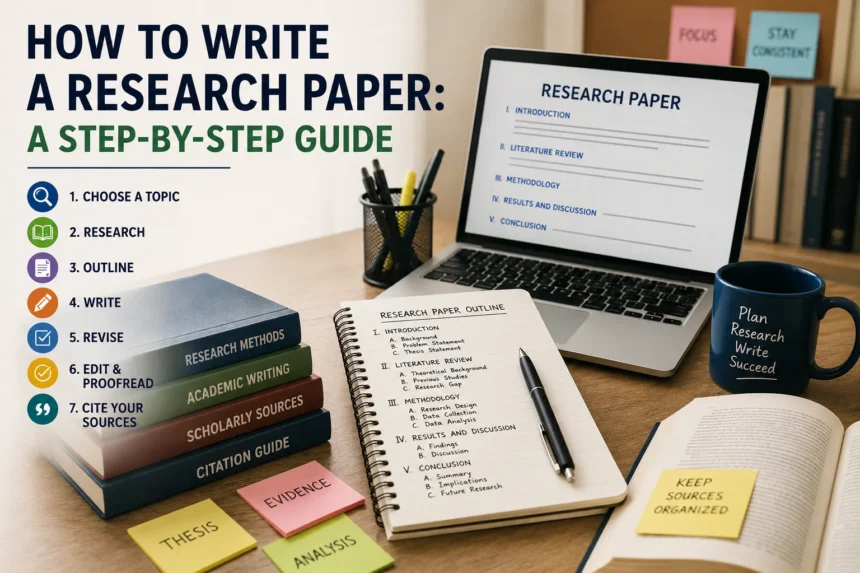
Writing a research paper can feel overwhelming, especially if it’s your first time. From choosing a topic to organizing information and correctly citing sources, the process involves several important steps. However, once you understand the structure and approach, writing a research paper becomes much more manageable.
This guide will walk you through how to write a research paper, explain the standard research paper format, and help you create a strong research paper outline that makes the writing process easier.
What Is a Research Paper?
A research paper is an academic document that presents original analysis, interpretation, or arguments based on extensive research. Unlike essays that may rely heavily on personal opinions, research papers use evidence from credible sources to support claims.
Research papers are commonly assigned in schools, colleges, and universities to evaluate a student’s ability to research, analyze information, and present findings clearly.
Why Research Papers Matter
Research papers help students:
- Develop critical thinking skills
- Improve analytical abilities
- Learn proper research techniques
- Strengthen academic writing skills
- Build expertise on a specific topic
Understanding how to write a research paper is a valuable skill that can benefit students throughout their academic and professional careers.
Step 1: Choose a Strong Research Topic
The first step is selecting a topic that is interesting, relevant, and manageable.
When choosing a topic:
- Pick something you genuinely find interesting.
- Ensure sufficient research material is available.
- Avoid topics that are too broad or too narrow.
- Consider assignment requirements and guidelines.
For example, instead of choosing “Climate Change,” narrow it down to “The Impact of Climate Change on Coastal Cities.”
A focused topic makes research and writing much easier.
Step 2: Conduct Thorough Research
Once you’ve selected a topic, begin gathering information from reliable sources.
Good research sources include:
- Academic journals
- Scholarly articles
- Books
- Government publications
- University websites
- Reputable research databases
While researching:
- Take detailed notes.
- Record source information for citations.
- Highlight important findings and statistics.
- Look for different viewpoints.
Strong research serves as the foundation of a high-quality paper.
Step 3: Develop a Thesis Statement
A thesis statement is the main argument or central idea of your paper.
It should:
- Clearly state your position
- Be specific and focused
- Guide the direction of your research
Example:
“Online learning platforms have improved educational accessibility but require stronger student engagement strategies to maximize effectiveness.”
A clear thesis helps readers understand what your paper aims to prove or discuss.
Step 4: Create a Research Paper Outline
Before writing, organize your ideas into a logical structure using a research paper outline.
A basic outline looks like this:
I. Introduction
- Hook
- Background information
- Thesis statement
II. Literature Review or Background
- Existing research
- Key concepts
- Previous findings
III. Main Arguments
- Supporting Point 1
- Supporting Point 2
- Supporting Point 3
IV. Analysis and Discussion
- Interpretation of findings
- Evidence and examples
V. Conclusion
- Summary of key points
- Restate thesis
- Final thoughts
Creating a detailed outline saves time and helps maintain a logical flow throughout the paper.
Step 5: Understand the Research Paper Format
Following the correct research paper format is essential for academic success.
While formats may vary depending on your institution or citation style, most research papers include the following sections:
Title Page
The title page typically includes:
- Paper title
- Student name
- Institution name
- Course name
- Instructor name
- Submission date
Abstract
An abstract is a summary of the paper, usually between 150 and 250 words.
It includes:
- Research objective
- Methodology
- Main findings
- Conclusion
Introduction
The introduction introduces the topic, provides context, and presents the thesis statement.
Body Sections
The body contains detailed research findings, analysis, evidence, and discussion.
Conclusion
The conclusion summarizes the research and reinforces the significance of the findings.
References or Works Cited
This section lists all sources used in the paper according to the required citation style.
Step 6: Write the First Draft
With research completed and an outline prepared, start writing your first draft.
Focus on:
- Following your outline
- Supporting claims with evidence
- Maintaining logical transitions between sections
- Writing clearly and concisely
Remember that the first draft does not need to be perfect. The goal is to get your ideas onto the page.
Many students make the mistake of editing constantly while writing. Instead, complete the draft first and revise later.
Step 7: Support Arguments with Evidence
Strong research papers rely on evidence rather than personal opinions.
Support your arguments using:
- Statistics
- Research findings
- Expert opinions
- Case studies
- Scholarly sources
Whenever possible, explain how the evidence supports your thesis rather than simply presenting information.
This demonstrates critical thinking and strengthens your analysis.
Step 8: Cite Sources Correctly
Proper citations are crucial in academic writing.
Failure to cite sources can result in plagiarism, which may lead to serious academic consequences.
Common citation styles include:
- APA (American Psychological Association)
- MLA (Modern Language Association)
- Chicago Style
- Harvard Referencing
Always follow your instructor’s requirements and ensure every borrowed idea, quote, or statistic is properly referenced.
Step 9: Revise and Edit Your Paper
Revision is one of the most important steps in writing a research paper.
After completing your draft:
Review Content
Ask yourself:
- Does the paper support the thesis?
- Are the arguments clear?
- Is the evidence relevant?
Improve Structure
Check whether ideas flow logically from one section to the next.
Correct Grammar and Style
Look for:
- Grammar mistakes
- Spelling errors
- Punctuation issues
- Awkward sentences
Verify Citations
Double-check all citations and references for accuracy.
Many successful research papers go through multiple revisions before final submission.
Step 10: Proofread Before Submission
Proofreading is the final quality check.
Read your paper carefully to catch:
- Typographical errors
- Formatting inconsistencies
- Missing citations
- Incorrect page numbers
Reading aloud can help identify mistakes that are easy to overlook.
If possible, ask a friend, classmate, or mentor to review your work for additional feedback.
Common Mistakes to Avoid
When learning how to write a research paper, avoid these common errors:
Choosing a Topic That Is Too Broad
Broad topics often result in shallow analysis.
Using Unreliable Sources
Stick to academic and reputable sources whenever possible.
Weak Thesis Statements
A vague thesis makes the paper difficult to organize and support.
Lack of Evidence
Every major claim should be supported by credible research.
Poor Citation Practices
Improper citations can lead to plagiarism issues.
Tips for Writing a Better Research Paper
To improve your paper:
- Start early to avoid last-minute stress.
- Stay organized throughout the research process.
- Create a detailed outline before writing.
- Focus on clarity rather than complicated language.
- Use credible academic sources.
- Revise multiple times before submission.
These simple habits can significantly improve the quality of your work.
Conclusion
Learning how to write a research paper becomes much easier when you break the process into manageable steps. From selecting a focused topic and conducting research to creating a strong outline and following proper research paper format, each stage plays an important role in producing a successful paper.
By following these steps for writing a research paper, students can create well-structured, evidence-based papers that communicate ideas clearly and effectively. With practice, research writing becomes less intimidating and more rewarding, helping students develop valuable academic and professional skills.
FAQs
1. How do I start writing a research paper?
Start by choosing a focused topic, conducting research, and creating a thesis statement before developing an outline.
2. What is the standard research paper format?
Most research papers include a title page, abstract, introduction, body sections, conclusion, and references.
3. How long should a research paper be?
The length depends on the assignment requirements. Research papers can range from a few pages to extensive academic studies.