

What if having fewer things could actually give you more time, space, and peace of mind? That is the simple idea behind minimalist living.
It is not about throwing away everything you own or making your home look empty. Instead, minimalism encourages you to keep the things that genuinely add value to your life and let go of what does not.
For beginners, the idea can feel exciting but also a little overwhelming. Where do you even start? The answer is surprisingly simple: start small, pay attention to what you use, and focus on creating a life that feels lighter.
What Is Minimalist Living?
Minimalist living is about being intentional with what you own, the commitments you make, and how you spend your time. At its heart, it asks a simple question: Does this actually add value to my life? If something constantly takes up space, costs money, creates clutter, or demands your attention without giving much back, it may be worth reconsidering. The important thing to remember is that minimalism looks different for everyone. One person might feel comfortable with a nearly empty wardrobe, while another may have a large book collection that brings genuine happiness. There is no magic number of possessions you need to own. The goal is to create a lifestyle that feels useful, comfortable, and manageable.
Why Do People Choose a Minimalist Lifestyle?
Modern life makes it incredibly easy to accumulate things. Online shopping, sales, social media trends, and the fear of missing out can encourage us to buy things we never really needed. Over time, those purchases can turn into overflowing cupboards, crowded drawers, and a constant feeling that there is always something to organize. Minimalism offers a chance to step back from that cycle. Owning less can make cleaning easier, reduce unnecessary spending, and help you appreciate what you already have. It can also create mental breathing room. When your surroundings are less chaotic, everyday tasks often feel simpler, and you spend less time looking after possessions that rarely get used.
1. Start With One Small Area
If you are new to minimalist living, do not start by emptying your entire house. That approach sounds productive but can quickly become exhausting. Instead, choose one small area, such as a bedside table, bathroom shelf, kitchen drawer, or wardrobe section. Finishing a small project gives you a visible result without making the process feel impossible. Take everything out and look at each item individually. Ask yourself when you last used it and whether you would buy it again today. If something is broken, duplicated, uncomfortable, or simply forgotten, it deserves a second look. Starting small also helps you understand your habits before tackling larger spaces.
2. Declutter Without Feeling Guilty
Getting rid of possessions can be surprisingly emotional. Maybe a shirt reminds you of an important trip, or an old gift makes you think about someone you care about. You do not need to treat every sentimental object as clutter. Minimalism is not a competition to see who can own the fewest things. Instead, focus on whether an item still has meaning or purpose. If something matters deeply to you, keep it. If you are holding onto something only because you feel guilty about throwing it away, consider whether that guilt is a good enough reason to keep it. Your home should support your current life, not become a storage space for every chapter of your past.
3. Build a Simpler Wardrobe
Your wardrobe is often one of the easiest places to notice the benefits of owning less. Most people regularly wear a small percentage of the clothes they own, while the rest sit untouched for months. Start by taking out pieces you wear frequently and build around those instead of focusing on a specific number of items. Look for clothes that fit well, feel comfortable, and work with several outfits. You do not need to follow the traditional capsule wardrobe idea unless it suits you. A minimalist wardrobe can still include colorful clothes, accessories, formal outfits, or anything else you genuinely enjoy wearing. The difference is that every piece has a reason for being there.
4. Change the Way You Shop
Decluttering can make a difference, but changing your shopping habits prevents the same clutter from returning. Before buying something, pause for a moment rather than immediately reaching for your wallet. Ask yourself whether you need it, where you will keep it, and how often you realistically expect to use it. Try waiting 24 or 48 hours before making non-essential purchases. That small delay can reveal whether you genuinely want something or simply got caught up in the excitement of shopping. You can also unsubscribe from promotional emails and avoid browsing online stores when you are bored. Sometimes the easiest way to own less is simply to buy less.
5. Focus on Quality Over Quantity
Minimalism does not necessarily mean choosing the cheapest option. In some cases, buying one well-made product can be more sensible than repeatedly replacing several inexpensive versions. The idea is to think about long-term value rather than the initial price alone. Before purchasing something you expect to use regularly, consider its durability, usefulness, maintenance, and versatility. This approach can be particularly helpful for everyday items such as cookware, shoes, furniture, bags, and electronics. You do not need to buy premium products simply because they are expensive. The point is to make thoughtful purchases instead of constantly replacing things.
6. Minimalism Is More Than Decluttering
One of the biggest misconceptions about minimalist living is that it is only about having a tidy home. In reality, the same principle can be applied to your schedule. A calendar packed with meetings, social events, errands, and commitments can become just as overwhelming as a crowded room. Look at the things you regularly say yes to. Are they genuinely important to you, or are you agreeing because you feel obligated? Leaving some space in your schedule can give you more time for rest, hobbies, relationships, and activities that actually matter. Sometimes living more means doing less.
7. Create a Digital Minimalist Routine
Your phone can become another form of clutter. Hundreds of notifications, unused apps, endless emails, and social media feeds can quietly consume your attention throughout the day. Digital minimalism means becoming more intentional about what you allow onto your screen. Start by removing apps you rarely use and turning off unnecessary notifications. Unsubscribe from emails that you never read and organize important files so they are easier to find. You could also create periods during the day when your phone stays away. Even a short break from constant digital noise can make your mind feel noticeably calmer.
8. Make Minimalism Work for Your Lifestyle
There is no single correct way to practice minimalism. If you love cooking, having a well-equipped kitchen does not make you less minimalist. If books are important to you, keeping a large collection is perfectly reasonable. The same applies to hobbies, travel equipment, clothing, artwork, and other personal interests. The real question is whether your possessions support your lifestyle or constantly get in its way. Minimalism should make your life easier rather than create another set of rules to follow. If decluttering makes you anxious or forces you to give away things you genuinely value, slow down. There is no deadline.
Simple Rules to Keep Your Home Clutter-Free
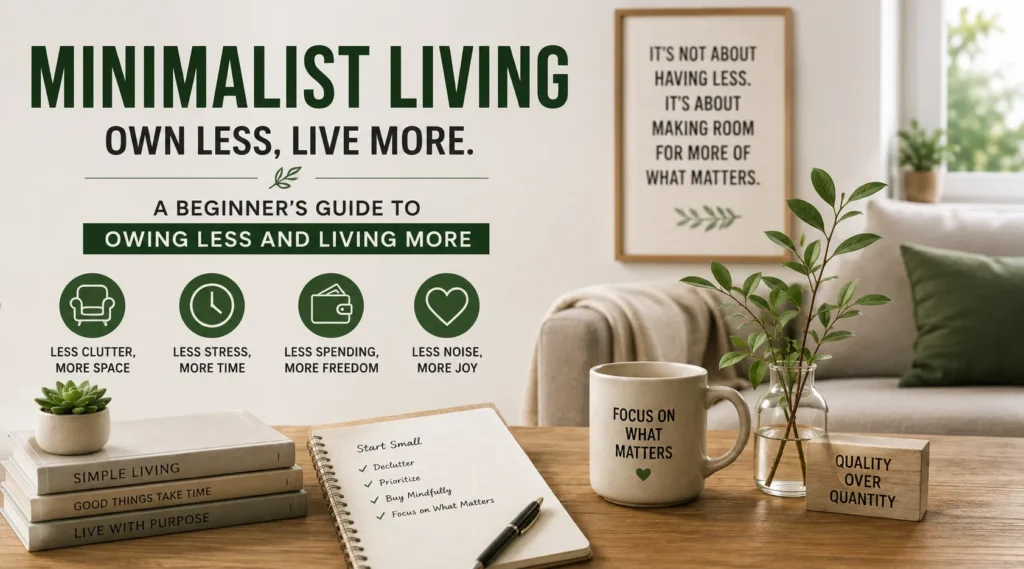
Once you have decluttered, the next challenge is preventing unnecessary items from slowly returning. A few simple habits can make a big difference without requiring much effort.
- Give everything you keep a designated place.
- Follow a one-in, one-out rule for certain categories.
- Avoid shopping simply because something is on sale.
- Deal with clutter before it becomes overwhelming.
- Keep frequently used items easy to access.
- Regularly review things you rarely use.
- Borrow or rent items you need only occasionally.
These habits are more sustainable than doing one huge decluttering session every few months. The aim is to make simplicity part of your normal routine rather than another major project on your to-do list.
The Benefits of Owning Less
When you own fewer unnecessary things, everyday life can become easier in surprisingly practical ways. There is less to clean, organize, maintain, move, and replace. You may also become more aware of your spending because you start thinking carefully before bringing something new into your home. There can be emotional benefits too. A calmer physical environment can make it easier to focus and relax. You may find yourself spending more time on experiences rather than shopping for things. Over time, this shift can change how you think about what you actually need to feel comfortable and content.
Final Thoughts
Minimalist living is not about creating an Instagram-perfect home with empty shelves and perfectly matching furniture. It is about making intentional choices about what deserves your money, space, time, and attention. You do not have to change your entire lifestyle overnight. The real reward of minimalism is not simply owning fewer possessions. It is having fewer things competing for your attention. When you remove what no longer serves you, you create more room for the things that do. Whether that means family, hobbies, travel, rest, creativity, or simply enjoying an ordinary day without feeling surrounded by unnecessary clutter.
For more lifestyle experiences, make sure to check out this website.
FAQ
1. What is minimalist living?
A. Minimalist living is a lifestyle focused on owning and doing only what adds genuine value to your life. It involves reducing unnecessary possessions, spending more intentionally, and creating more space for the things that matter.
2. How do I start living a minimalist lifestyle?
A. Start small by decluttering one area at a time. Keep items you regularly use or genuinely value, avoid unnecessary purchases, and gradually build habits that help prevent clutter from returning.
3. Does minimalist living mean owning very few things?
A. Not necessarily. Minimalism is different for everyone. You can own many things and still live minimally if your possessions are useful, meaningful, and intentionally chosen rather than accumulated without purpose.