

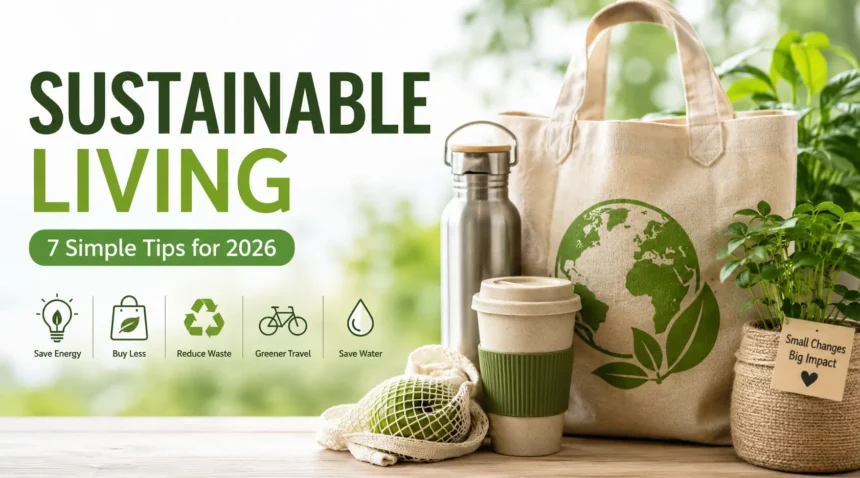
What if living a more sustainable life did not mean changing everything about the way you live? The good news is that you do not need to become completely zero-waste or spend a lot of money on eco-friendly products. Small changes in your daily routine can make a real difference over time.
Sustainable living is simply about using resources wisely, creating less waste, and making choices that are kinder to the planet. In 2026, this way of living is becoming easier because more people are paying attention to what they buy, how they travel, and how much energy they use.
If you want to make your lifestyle a little greener without making it complicated, here are seven simple habits you can start today.
Why Sustainable Living Matters In 2026?
Sustainable living is not about living a perfect, plastic-free life. It is about being more aware of the choices we make every day. The things we buy, the food we waste, the energy we use, and the way we travel all have an impact. By making simple changes, we can reduce waste, save resources, and sometimes even save money. The best part is that sustainable living does not have to feel like a sacrifice. Buying less can reduce clutter. Saving electricity can lower bills. Walking more can add movement to your day. Using leftovers can save money on groceries.
1. Use Less Electricity at Home
One of the easiest ways to live more sustainably is to be careful about how much electricity you use. You do not need to make major changes. Start with small habits. Turn off lights when you leave a room and unplug chargers and devices that you are not using. Using natural sunlight during the day can also reduce the need for artificial lighting. If you are buying new appliances, look for energy-efficient models. They may cost more at first, but they can use less electricity over time. Even simple changes, such as using LED bulbs and running your washing machine with full loads, can help reduce unnecessary energy use.
2. Buy Less and Choose Better
We live in a world where it is very easy to buy things we do not really need. A quick online sale can make it tempting to purchase clothes, gadgets, home items, and other products simply because they are discounted. Before buying something, take a moment and ask yourself, “Do I really need this?” Buying fewer things can reduce waste and save money at the same time. When you do need something, consider choosing products that are made to last rather than items that may need replacing quickly. You can also repair, reuse, donate, or sell things instead of throwing them away. That old jacket or piece of furniture might still have plenty of life left in it.
3. Cut Down on Food Waste
Food waste is another area where small changes can have a big impact. Start by planning your meals before going grocery shopping. This can help you avoid buying more food than you can actually eat. Check what you already have in your kitchen before making a shopping list. Store food properly so it stays fresh for longer. If you have leftovers, turn them into another meal instead of letting them sit forgotten in the fridge. You can also try buying loose fruits and vegetables when possible instead of choosing heavily packaged options. You do not have to completely change your diet. Simply wasting less of the food you already buy is a great step toward a more sustainable lifestyle.
4. Choose Greener Ways to Travel
Travel is a big part of modern life, but how we move from one place to another can also affect the environment. For short trips, consider walking or cycling when it is practical. Public transport can also be a good option, especially for regular journeys. If you need to drive, carpooling can help reduce the number of vehicles on the road. Keeping your car properly maintained can also help it run more efficiently. For longer trips, think about whether you really need to fly or whether another form of transport could work. You do not have to stop travelling. The goal is simply to make more thoughtful choices when you can.
5. Reduce Single-Use Plastic
Plastic is everywhere, from shopping bags and food packaging to disposable cups and bottles. While avoiding plastic completely is difficult, reducing single-use plastic is much easier. Carry a reusable water bottle, coffee cup, and shopping bag. At home, choose reusable containers instead of disposable ones whenever possible. You can also avoid buying products with unnecessary layers of packaging when there is a simpler option available. The important thing is not to feel guilty when you cannot avoid plastic. Sustainable living is about making better choices where possible, not trying to be perfect.
6. Make Your Home More Eco-Friendly
Your home can become more sustainable without turning into a major renovation project. Use curtains or blinds to help keep your home cool during hot weather and warm during colder months. Avoid leaving taps running while brushing your teeth or washing dishes. Fix leaking taps quickly because even a small leak can waste a surprising amount of water over time. You can also grow a few plants at home. If you have outdoor space, consider growing herbs or vegetables. Even a small balcony garden can make your home feel greener. Simple habits such as using water carefully and reducing energy waste can slowly become part of your normal routine.
7. Make Sustainability a Daily Habit
The most important tip is to keep things realistic. You do not need to change your entire lifestyle overnight. Pick one or two habits that feel easy for you. Once they become normal, add another. Maybe you start by carrying a reusable bottle. Later, you might reduce food waste or start using public transport more often. It also helps to involve your family or friends. Sustainable habits are easier to maintain when everyone around you is doing their part. Remember, one person making a small change may not seem like much. But millions of people making small changes can create a much bigger impact.
Final Thoughts
Living sustainably in 2026 can be much simpler than it sounds. You do not need expensive products, a completely new lifestyle, or a perfect routine. Start small. Use less energy, waste less food, buy more carefully, reduce single-use plastic, and think about greener ways to travel. Most importantly, focus on progress rather than perfection. A sustainable lifestyle is built from everyday choices. And when those small choices become habits, they can make a meaningful difference for both your life and the planet.
For more lifestyle and healthcare details, make sure to check out this website.
FAQ
1. What is sustainable living?
A. Sustainable living means making everyday choices that reduce waste, save natural resources, and have less impact on the environment. It can include saving energy, using less plastic, reducing food waste, and buying only what you need.
2. Is sustainable living expensive?
A. Not necessarily. Many sustainable habits can actually help you save money. Buying fewer things, using less electricity and water, repairing old items, and reducing food waste can lower your everyday expenses.
3. How can I start living more sustainably?
A. Start with simple changes that fit your daily routine. Use reusable bags and bottles, switch off unused lights, save water, reduce food waste, and consider walking or using public transport for short trips.