


Are you tired of diets that feel complicated, boring, or impossible to stick with? The Mediterranean diet offers a simple alternative. Inspired by the everyday eating habits of people in countries like Greece and Italy, it focuses on fresh vegetables, fruits, whole grains, beans, nuts, fish and olive oil.
This way of eating supports better heart health, steadier weight, and more energy. It’s ideal for beginners, busy families or anyone looking to eat healthier without strict rules. If you want a lifestyle you can enjoy for years, here’s everything you need to get started.
What Is the Mediterranean Diet?
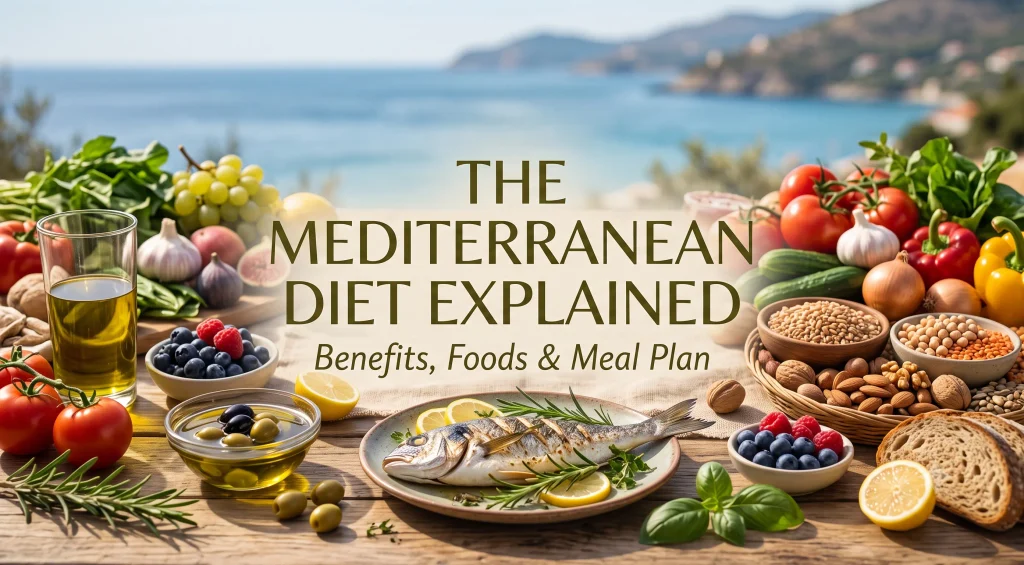
The Mediterranean diet is a simple eating style based on the traditional meals of countries like Greece, Italy, and Spain. This healthy diet focuses on fresh, whole foods- mostly from plants. It also includes healthy fats like olive oil and moderate amounts of fish, dairy, and poultry.
- Lots of vegetables and fruits
- Whole grains like oats, brown rice, and whole-wheat bread
- Beans, lentils, and chickpeas
- Nuts and seeds
- Olive oil as the main cooking fat
- Fish and seafood a few times a week
- Little red meat, sugar, and processed food
- Herbs and spices instead of extra salt
Health Benefits of the Mediterranean Diet
The Mediterranean diet is one of the most studied eating patterns worldwide and research continues to link it to better health for both body and mind. It is rich in fiber, healthy fats, and antioxidants, so it supports many areas of health at once, without strict rules or special products.
- Better heart health: Olive oil, nuts, and fish can help lower bad cholesterol and blood pressure, which reduces the risk of heart disease and stroke.
- Healthy weight: Fiber-rich foods keep you full for longer, making it easier to avoid overeating without feeling hungry.
- Lower risk of type 2 diabetes: Whole grains, beans, and vegetables digest slowly and help keep blood sugar steady.
- Brain and memory: Studies link this way of eating to a lower risk of memory decline as we age.
- Less inflammation: Fruits, vegetables, and healthy fats help calm inflammation, which is connected to many long-term illnesses.
- Stronger gut health: Plant foods feed the good bacteria in your digestive system, supporting better digestion.
- Longer, healthier life: People who follow it closely tend to live longer and have fewer chronic health problems.
Foods to Eat on the Mediterranean Diet
The Mediterranean diet is built on simple foods. Most of your plate comes from plants, with healthy fats and protein from fish, nuts, and olive oil. You do not need to cut out everything else. Just make these foods the base of your meals and keep the rest in small amounts.
Eat every day
- Vegetables: Tomatoes, spinach, cucumbers, onions, peppers, broccoli
- Fruits: Apples, oranges, grapes, berries, figs, dates
- Whole grains: Oats, brown rice, whole-wheat roti or bread, millets
- Beans and legumes: Lentils, chickpeas, kidney beans, peas
- Nuts and seeds: Almonds, walnuts, pistachios, flax seeds
- Healthy fats: Extra virgin olive oil as the main cooking oil
Eat a few times a week
- Fish and seafood: Salmon, sardines, mackerel, prawns
- Poultry and eggs: Chicken, turkey, eggs
- Dairy: Yogurt, paneer, and cheese in small portions
Eat only once in a while
- Red meat
- Sweets and desserts
- Sugary drinks
- Packaged and fried foods
7-Day Mediterranean Diet Meal Plan
| Day | Breakfast (Morning routine) | Lunch | Dinner | Snack |
|---|---|---|---|---|
| Day 1 | Oatmeal with berries, walnuts and yogurt | Chickpea and vegetable salad with whole-wheat bread | Grilled salmon, brown rice and roasted vegetables | Apple with a handful of almonds |
| Day 2 | Greek yogurt with banana, oats and chia seeds | Lentil soup with a whole-grain salad | Chicken with roasted vegetables and quinoa | Carrots with hummus |
| Day 3 | Whole-wheat toast with avocado and boiled egg | Tuna, tomato and cucumber salad with olive oil | Chickpea and vegetable stew with brown rice | Orange and a few walnuts |
| Day 4 | Oatmeal with apple, cinnamon and almonds | Whole-wheat pita with hummus, vegetables and grilled chicken | Baked fish with roasted potatoes and a green salad | Greek yogurt with berries |
| Day 5 | Greek yogurt with fruit, nuts and seeds | Mediterranean-style lentil and vegetable bowl | Whole-wheat pasta with tomatoes, vegetables and olive oil | Pear with almonds |
| Day 6 | Vegetable omelet with whole-wheat toast | Chickpea salad with cucumber, tomato, herbs and olive oil | Grilled chicken, quinoa and steamed vegetables | Hummus with cucumber and carrots |
| Day 7 | Whole-grain toast with peanut butter and banana | Bean and vegetable soup with a side salad | Grilled fish with brown rice and roasted vegetables | Apple with walnuts |
How to Start the Mediterranean Diet?
This isn’t really a “diet.” It’s just eating as people do on sunny coastlines. Here’s how to start
Step 1: Fill your plate with plants: Veggies, fruits, beans, and whole grains are your new best friends.
Step 2: Swap your fats: Use olive oil instead of butter. Your salad will thank you.
Step 3: Eat more fish: Try it twice a week like Salmon, sardines, or tuna – all work.
Step 4: Snack on nuts: A small handful beats chips any day.
Step 5: Try simple Mediterranean diet recipes: Start with a Greek salad, hummus with veggies or pasta with tomatoes and olive oil.
Step 6: Slow down and enjoy: Eat with people you love, chat, and savor every bite.
Is the Mediterranean Diet Right for You?
If you want to eat healthier without strict rules, then you can opt for the Mediterranean diet . You get tasty food, simple ingredients, and no counting or stress. Start small, maybe with one new meal or a few easy Mediterranean diet recipes this week. Keep adding more plants, olive oil, and fish as you go. Before long, healthy eating will feel natural, and you’ll enjoy every bite.
FAQs
Q. What is a Mediterranean diet meal plan?
A. It’s a simple weekly meal plan built around veggies, fruits, whole grains, beans, fish and olive oil. It shows you what to eat each day so healthy eating feels easy.
Q. What are 5 benefits of the Mediterranean diet?
A. It supports a healthy heart, a steady weight, and lower blood sugar. It also helps your brain and memory and calms inflammation in the body.
Q. What foods do you eat on the Mediterranean diet?
A. Mostly vegetables, fruits, whole grains, beans, nuts, and olive oil. Fish, chicken, eggs, and yogurt are enjoyed in smaller amounts.
Q. How many eggs a week should you eat on the Mediterranean diet?
A. Most people enjoy about 2 to 4 eggs a week. There’s no strict rule, so just keep it moderate.
Q. What is the best breakfast to eat on a Mediterranean diet?
A. Oatmeal with berries and walnuts, or Greek yogurt with fruit and nuts, is a great pick. Whole-wheat toast with avocado and an egg works well too.