
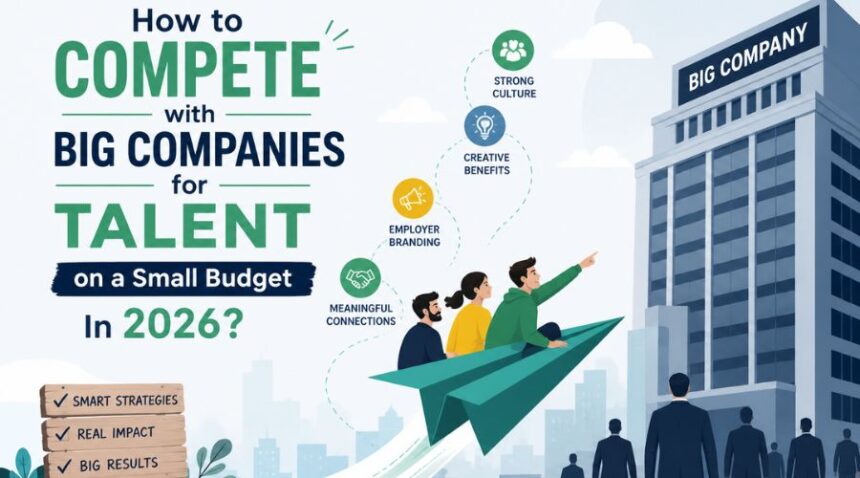
Can a small business really win against Google or Amazon when it comes to hiring? Honestly, I used to think the answer was no. Big companies offer big salaries, fancy perks, and brand names that candidates recognize instantly. But here is what I have learned watching the hiring market shift in 2026.
The days of money alone influencing the candidate are long gone. In fact, modern candidates are concerned as much with how they are perceived as individuals as with their ability to progress and achieve in their role within a business. And there is more that you can offer in these areas than you may realize.
Top Strategies For 2026 Small-Budget Talent Acquisition
Successful hiring for 2026 doesn’t come from throwing around cash. In fact, successful hiring in 2026 requires speed, authenticity, and a little creativity. Network your way through the hiring process, showcase your culture, and reach out to potential candidates where they live.
High Flexibility and Culture
Here is something worth knowing: in early 2026, remote and hybrid work will no longer be perks. They are baseline expectations. Gallup’s survey of U.S. remote-capable workers found that 52% are hybrid and six in ten remote-capable employees want a hybrid arrangement. Big corporations are actually pulling back on this. 55% of Fortune 500 companies now require employees to be in the office five days a week, compared to just 5% in 2021. That is your opening.
A smaller organization can provide things that the larger organization will simply not allow under its HR policy manual. These can include anything ranging from a Tuesday that begins at 10 am to a four-day compressed workweek, or even working from home on three out of five days of the week. In one case I observed, these were the only major USP the small team had, and it worked for them.
Leverage AI for Sourcing
I know what you are thinking: AI tools are expensive and built for enterprise teams. That used to be true, but not anymore. Cloud-based talent technology suites and AI tools have eliminated the need for massive capital investment, making enterprise-grade capabilities available at small and mid-sized business price points.
88% of employers already use AI for initial screening, and more than half of HR teams expect to add an AI agent to their teams. You do not need a full HR department to do this. Free and low-cost tools can help you write better job descriptions, screen applications faster, and even reach passive candidates you would never have found through a simple job board post. Using AI smartly lets your small team punch well above its weight.
Prioritize Skill-Based Hiring
Drop the degree requirement if the role does not truly need one. Skills-based hiring increased to 81% in 2024, as employers shifted their focus to competencies rather than formal education. This is one of the smartest moves a small business can make.
If you start hiring based on skills, your candidate pool will become much larger. You will end up with employees who can do the actual work instead of having candidates from a certain institution on your payroll. It has been estimated that the skills gap will leave the United States short of more than 5 million skilled workers by 2032, making this hiring method essential for your needs as well.
Create A High-Impact Employer Brand
You do not need a marketing budget to build a strong employer brand. You need authenticity. Companies with a strong employer brand see a 50% reduction in cost per hire and a 28% reduction in turnover. Those numbers should get your attention.
Start with something basic. Talk about what’s going on inside the office on LinkedIn. Get your existing employees to explain why they’ve decided to stay. Tell true stories rather than trying to sound like a textbook. People who will work with you in 2026 look into Glassdoor, Reddit, and their networks to figure out whether a company is worth working for even before they apply. And a simple story about how your people partied over a minor victory will mean more to them than a “we’re hiring” post.
Enhance Candidate Experience
Think about the last time you had a frustrating experience as a customer somewhere. You probably told people about it. Candidates do the same thing. A slow, confusing, or cold hiring process will cost you good people, and they will tell others.
The solution to the problem is quite simple and incurs no cost. First, ensure prompt responses to submitted applications. Second, set realistic expectations concerning the duration. Third, provide feedback regardless of whether an applicant gets the job. Finally, if possible, adapt the strategy on the fly, for example, shorten the application form and make it shorter and conduct one interview round only. This way, a candidate who has had a good experience with you will send a new applicant your way.
Build A Referral Program
Your existing team is your best recruiter. People refer others they trust, which means you get better candidates with less effort and almost no cost. A simple referral bonus, even a modest one like a gift card or an extra day off, can keep referrals coming in steadily.
Companies that offer upskilling opportunities see 94% higher retention rates, and employees who feel invested in are far more likely to refer good people from their own networks. Make it easy for your team to share open roles. Give them a simple message they can post or forward. You will be surprised how many of your next great hires come from someone already sitting on your team.
Leverage Niche Networks And Partnerships
You do not need to post on every job board. Instead, go where your specific candidates actually spend their time. Join industry-specific communities, reach out to local colleges and bootcamps, and build partnerships with training programs that produce the kind of talent you need.
Sophisticated recruitment capabilities are no longer the exclusive domain of large enterprises. In 2026, small to mid-sized organizations are dramatically increasing their adoption of advanced talent acquisition strategies. Niche partnerships are a big part of that shift. A handshake agreement with a local coding bootcamp or a nursing program can give you first access to fresh talent before big companies even know those candidates exist.
Key 2026 Hiring Trends
Hiring in 2026 is all about flexibility and speed. Companies are mixing remote, hybrid, and project-based roles more than ever. Skills are starting to matter more than degrees, and candidates expect a smoother, more human hiring experience. It’s less corporate, more real.

AI-Driven Hiring
Talent acquisition in 2026 looks nothing like it did even a couple of years ago, and AI is the reason. 84% of talent leaders worldwide say they will use AI in 2026. But here is the important nuance: AI handles the routine stuff so your people can focus on the human part of hiring.
AI agents can now handle up to 80% of transactional recruitment activities: initial resume screening, chatbot-driven candidate Q&A, interview scheduling, and compliance documentation. For a small team, that kind of automation is genuinely game-changing. You get speed and scale without needing to hire a five-person recruiting department.
Skill-First Focus
Nearly 75% of talent acquisition leaders say critical thinking is the top skill they are looking for in 2026, with AI knowledge ranking fifth. The message is clear: what someone can do and how they think matters far more than where they studied.
For small businesses, this is great news. You can evaluate candidates on practical tasks and real conversations rather than resume filters. And because you move faster and with less bureaucracy than a large company, you can make offers quickly once you find the right fit, before anyone else does.
Retention-Focused Onboarding
Hiring someone is only half the battle. Keeping them is the other half, and it starts from day one. Research shows that retention improved significantly after companies extended their onboarding process from two weeks to 90 days. A new hire at a big company might spend their first month in training rooms and HR orientations, never meeting the person who actually makes decisions. At your company, they can sit with the founder in week one, understand the full picture of the business, and feel like they genuinely belong. That sense of connection is what keeps people around and what makes them tell their friends to come work with you, too.
Summing Up
Competing with big companies for talent in 2026 is not about matching their budgets. It is about knowing where you are stronger, being honest about what you offer, and making every single candidate feel like they matter. If you want to make that process even smoother, tools like Gusto can help you manage hiring, payroll, and benefits in one place. So, you spend less time on admin and more time actually building your team. I believe small businesses have a real edge here. They just need to own it.
FAQ
Q. Can a small business really compete with big companies for top talent without matching their salaries?
A. Yes. Salary matters, but it is rarely the only thing candidates care about. Flexibility, real growth, and a workplace where people feel seen often matter more. Lead with what you genuinely offer, and you will attract the right people.
Q. How much does employer branding cost for a small business?
A. Not much at all. A few honest LinkedIn posts, real team stories on your careers page, and genuine Glassdoor responses go a long way. Companies with a strong employer brand see 50% lower cost per hire, and most of that can be built without a big budget.
Q. What is the easiest first step a small business can take to improve hiring right now?
A. Fix your candidate experience. Reply faster, cut unnecessary interview rounds, and be clear about timelines. It costs nothing but signals to candidates that you respect their time, and that alone puts you ahead of most big, slow-moving companies.