

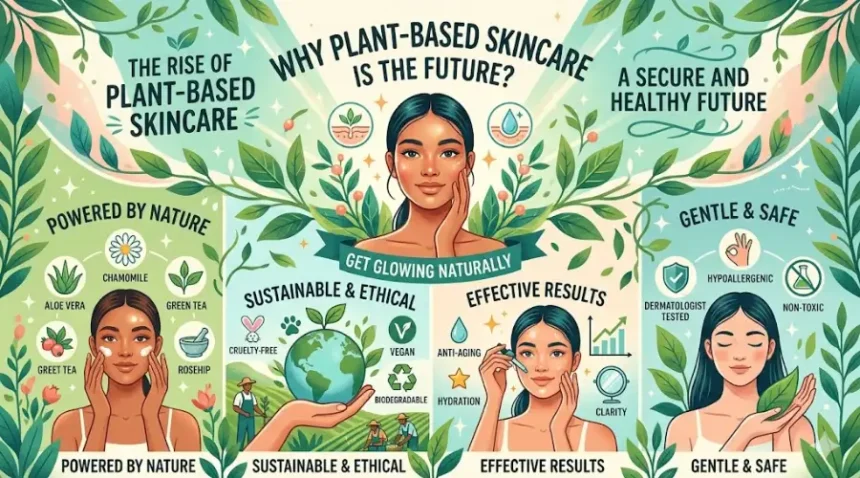
Have you ever stopped to read the back of your moisturizer and wondered what half those ingredients even are? I have, and honestly, it sent me down a rabbit hole I never came back from.
More and more people are waking up to the fact that what we put on our skin matters just as much as what we put in our bodies. Plant-based skincare is no longer just a trend for eco-warriors or wellness bloggers. It is quietly becoming the new standard, for very good reasons hard to ignore.
What Exactly Is Plant-Based Skincare?
Before we get into the why, let us quickly talk about the what. Plant-based skincare refers to products made primarily from plant-derived ingredients: botanical oils, herbal extracts, flower waters, roots, seeds, and leaves. These products skip synthetic chemicals, artificial fragrances, and lab-made compounds that have dominated the beauty industry for decades. The global plant-based skincare market was valued at around USD 20.08–20.48 billion in FY26. That is not a small shift. That is the industry telling us something loud and clear. People want better, cleaner, and more conscious choices for their skin.
5 Reasons Plant-Based Skincare Is the Future
Plant-based skincare is gaining momentum for good reason. It’s gentler on your skin, kinder to the planet, and rooted in transparency you can actually trust. From clean ingredients to cruelty-free values, it’s reshaping how we think about beauty. Curious why it’s the future? Read the full article to get the complete picture.
1. Superior Skin Compatibility
Here is something I find genuinely fascinating: human skin has been interacting with plants for thousands of years. Long before serums and peptides existed, people were using aloe vera for burns, turmeric for inflammation, and rosehip oil for scars. Our skin actually knows how to work with plant-based ingredients. Synthetic chemicals, on the other hand, are a relatively new introduction to skincare. And while many of them are considered safe, a large number of people experience irritation, breakouts, or allergic reactions. Ingredients such as parabens, sulfates, and artificial preservatives can disrupt the skin’s natural barrier over time.
Plant-based alternatives like chamomile extract, green tea, bakuchiol (a natural alternative to retinol), and jojoba oil work with your skin rather than against it. A study published in the Journal of Clinical and Aesthetic Dermatology found that plant-derived antioxidants can significantly reduce signs of aging without the side effects commonly linked to synthetic retinoids. That is a big deal, especially if you have sensitive skin as I do.
2. Sustainability and Eco-Consciousness
Let us be honest. The beauty industry faces packaging and pollution problems. Traditional skincare relies heavily on petroleum-based ingredients, microplastics, and synthetic compounds that do not break down easily. The result? Products that are hard on the planet long after you have used them up. Plant-based skincare flips this entirely. Ingredients derived from plants are naturally biodegradable, meaning they break down in our waterways and soil over time. Many plant-based brands are also leading the charge on sustainable packaging, using glass, recycled materials, or even compostable containers.
The numbers back this up, too. According to a 2022 Nielsen report, 73% of global consumers say they would definitely or probably change their purchasing habits to reduce environmental impact. And the beauty industry is responding. Brands that commit to sustainable sourcing and eco-friendly formulas are growing twice as fast as those that do not. If you care about the planet, even a little, plant-based skincare is one of the easiest swaps you can make.
3. High-Performance Innovations
I think one of the biggest myths around plant-based skincare is that it is somehow less effective than the heavy-hitting synthetic stuff. I used to believe this too. But the science is catching up fast, and the results are genuinely impressive. Take bakuchiol, for example. It is a plant extract from the Babchi plant that has been shown in clinical trials to deliver results comparable to retinol, reducing fine lines, improving skin texture, and boosting collagen, but without the redness, peeling, or sun sensitivity that retinol is infamous for. Another example is niacinamide, derived from natural sources, which is now one of the most researched skincare ingredients for brightening and pore reduction.
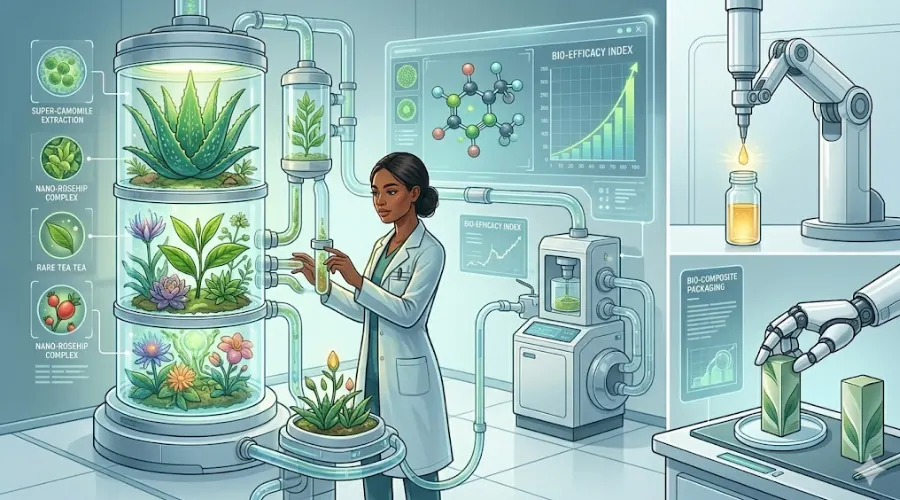
Brands are also investing seriously in plant stem cell technology, adaptogen-infused serums, and fermented botanical blends that deliver active results at a cellular level. The idea that you need chemicals to get results is simply outdated. The plant world has an extraordinary amount to offer, and we are only just beginning to understand it.
4. Ethical and Cruelty-Free
This one hits differently when you think about it. A huge part of the shift toward plant-based skincare is driven by a growing discomfort with how traditional beauty products are tested and made. Animal testing has long been a standard part of product safety checks in the cosmetic industry, but that is changing, partly because consumers are demanding it.
Plant-based skincare brands are overwhelmingly cruelty-free. Because the ingredients are naturally derived and have long histories of safe use, many brands can skip animal testing altogether. As of 2026, over 45 countries have either banned or significantly restricted cosmetic animal testing. The EU led the way back in 2013, and momentum is only growing globally. When you choose plant-based, you are often choosing a product that did not harm an animal to reach your bathroom shelf. That feels good, and it should.
5. Transparency and Consumer Demand
Something has shifted in how we shop. We are asking more questions. We want to know what is in our products, where those ingredients come from, and whether the brand actually stands behind what it says. This demand for transparency is reshaping the entire skincare industry, and plant-based brands are naturally better positioned to meet it.
Why? Because plant-based ingredients are easier to trace, easier to explain, and easier to understand. Cold-pressed rosehip oil is a lot easier to trust than butylated hydroxyanisole. A Mintel report found that 64% of skincare consumers actively read ingredient labels before buying, up from just 39% five years ago. That is a massive jump, and it tells you exactly where the industry is heading. Brands that are open about their sourcing, their formulations, and their ethics are winning. And most of them are plant-based.
The Bottom Line
Plant-based skincare is not a passing phase. It is a response to decades of overcomplicated, opaque, and often harmful beauty practices. Whether it is the gentleness on your skin, the respect for the planet, the cruelty-free ethos, or simply knowing exactly what you are putting on your face, there are real, compelling reasons to make the switch.
I am not saying you need to throw out everything in your bathroom cabinet overnight. But the next time you are reaching for a new moisturizer or serum, maybe give the plant-based option a proper look. Your skin, and the planet, will probably thank you for it, and brands like Aveda is a great place to start exploring what that looks like in practice.
FAQ
Q1. Is plant-based skincare suitable for all skin types?
A. Yes, and that is honestly one of its biggest strengths. Because plant-based ingredients tend to work with your skin’s natural biology rather than against it, they are generally well-tolerated across oily, dry, combination, and sensitive skin types.
Q2. Are plant-based skincare products as effective as conventional ones?
A. Absolutely. The old idea that natural means weak simply does not hold up anymore. Ingredients like bakuchiol, vitamin C from kakadu plum, and fermented plant extracts have solid clinical research behind them.
Q3. How do I know if a product is truly plant-based?
A. The best way is to read the ingredient list. It should be the first thing you check. Look for recognizable, plant-derived names and avoid long strings of synthetic chemicals you cannot pronounce. Certifications like COSMOS Organic, ECOCERT, or Leaping Bunny are also a good sign that a brand is being genuinely transparent, not just using “natural” as a marketing word.