


Do you often feel like there is never enough time for both work and your personal life? You finish your workday, but your mind is still thinking about emails, deadlines, meetings, and tomorrow’s tasks.
At the same time, you may feel guilty for not spending enough time with family, friends, hobbies, or yourself. The good news is that work-life balance does not mean giving equal time to everything every day.
Some days will be more focused on work, while others may give you more personal time. The real goal is to create a routine where work does not constantly take over your life.
Why Work-Life Balance Matters?
A healthy work-life balance can make both your professional and personal life more enjoyable. When you have enough time to rest and recharge, it can become easier to focus during working hours. It can also help prevent the feeling that every day is simply work, sleep, and repeat. Personal time gives you an opportunity to maintain relationships, enjoy hobbies, take care of yourself, and experience life outside your job.
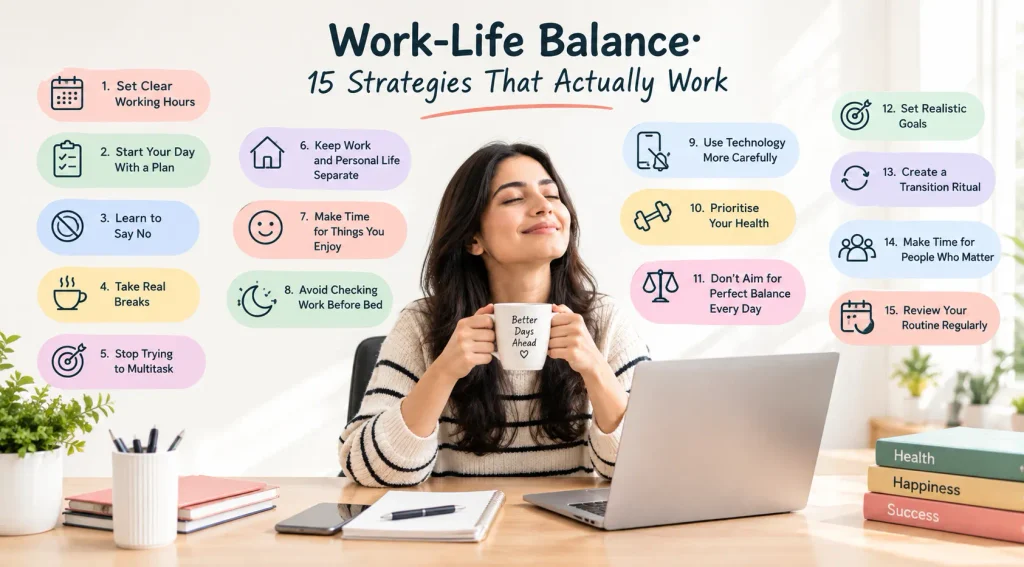
Most importantly, balance looks different for everyone. What works for one person may not work for another. The key is to create a routine that fits your responsibilities, energy levels, and priorities. Here are 15 simple strategies that can help you create a healthier and more manageable balance.
1. Set Clear Working Hours
One of the easiest ways to protect your personal time is to decide when your workday starts and ends. This is especially important if you work from home. Try to avoid checking work emails or messages after your working hours unless something is genuinely urgent. When your workday is over, give yourself permission to switch off. You do not need to be available every minute of the day to be a good employee.
2. Start Your Day With a Plan
A busy day can quickly become stressful when you do not know where to start. Spending just 10 minutes planning your day can make a big difference. Write down the most important tasks you need to complete and tackle them first. Keep smaller or less urgent tasks for later. A simple daily plan can help you stay focused instead of constantly jumping between different tasks.
3. Learn to Say No
Saying no can feel uncomfortable, especially at work. You may worry about disappointing someone or appearing unhelpful. However, saying yes to everything can quickly leave you overwhelmed. Before accepting another task, think about your current workload and deadlines. A polite “I don’t have the capacity for this right now” can be much better than taking on too much and struggling to complete everything properly.
4. Take Real Breaks
Taking a break does not mean scrolling through work messages while having lunch. Your brain needs actual time away from work. Get up, stretch, walk around, have lunch away from your desk, or simply sit somewhere quiet for a few minutes. Short breaks during the day can help you return to your work feeling more refreshed and focused.
5. Stop Trying to Multitask
Multitasking may make you feel productive, but constantly switching between tasks can make it harder to concentrate. Instead, try working on one important task at a time. Once it is finished or you reach a natural stopping point, move to the next one. This approach can reduce mental clutter and help you finish your work more efficiently.
6. Keep Your Work and Personal Life Separate
When possible, create a physical or mental separation between work and home life. If you work from home, try to use a specific area for work rather than working from your bed or sofa. At the end of the day, close your laptop and leave the workspace. This small habit can help your brain understand that work is finished.
7. Make Time for Things You Enjoy
Your personal life should not only consist of chores and responsibilities. Make space for activities that genuinely make you happy. It could be reading, watching a movie, cooking, exercising, gardening, gaming, travelling, or meeting friends. You do not need several free hours every day. Even 20 or 30 minutes spent doing something you enjoy can make your day feel more balanced.
8. Avoid Checking Work Before Bed
Checking one last email before sleeping can easily turn into checking five more. Before you know it, you are thinking about work when you should be relaxing. Try creating a work-free period before bedtime. Put your laptop away and silence unnecessary work notifications. Giving yourself time to mentally disconnect can make evenings calmer and help you prepare for sleep.
9. Use Technology More Carefully
Technology makes work easier, but it can also make it difficult to switch off. Turn off unnecessary notifications and decide which messages actually need your immediate attention. You can also use separate apps or accounts for personal and professional communication. The goal is not to avoid technology. It is to make sure technology does not control your attention all day.
10. Prioritise Your Health
Work becomes much harder when you constantly ignore your physical needs. Try to get enough sleep, eat regular meals, drink enough water, and include some movement in your day. You do not need an intense workout routine to stay active. A short walk, some stretching, or a few minutes of exercise can be a good starting point. Taking care of your health is not wasted time. It helps you function better at work and outside it.
11. Don’t Aim for Perfect Balance Every Day
One of the biggest mistakes people make is expecting every day to look perfectly balanced. Some days will require extra hours at work. Other days may involve family responsibilities, appointments, or personal commitments. Instead of asking whether every single day is perfectly balanced, look at your routine over a longer period. The important thing is to make sure work does not permanently consume your personal time.
12. Set Realistic Goals
An endless to-do list can make you feel like you are constantly falling behind. Instead, set realistic goals for each day. Focus on what actually needs to be completed rather than trying to finish everything at once. When your goals match the time and energy you realistically have, you are less likely to end the day feeling frustrated.
13. Create a Transition Ritual
Moving directly from work mode to personal mode can sometimes be difficult, especially when working from home. Create a small routine that signals the end of your workday. You could take a short walk, change your clothes, make tea, listen to music, or spend a few minutes outdoors. These simple actions can help your mind shift away from work.
14. Make Time for People Who Matter
Relationships can easily get pushed aside when work becomes busy. However, spending time with family and friends can help you feel connected and supported. You do not always need to plan something elaborate. A phone call, dinner together, or a short conversation can be enough. Try to treat important personal time with the same respect you give to work commitments.
15. Review Your Routine Regularly
Work-life balance is not something you achieve once and never think about again. Your workload, priorities, and personal responsibilities can change over time. Take some time every few weeks to ask yourself what is working and what is not. Are you working too late? Are you getting enough rest? Are you spending time on things that matter to you? If something is not working, make a small change rather than trying to completely rebuild your life overnight.
Final Thoughts
Work-life balance does not require a perfect schedule or a completely stress-free life. It is about setting boundaries and making intentional choices about where your time and energy go. Start small. Set a clear finishing time, take proper breaks, reduce unnecessary notifications, or simply make 30 minutes for something you enjoy. You do not need to change everything at once. The best work-life balance strategy is one you can actually maintain. Small changes, repeated consistently, can eventually create a routine where you can work well without feeling like work is taking over your entire life.
For more lifestyle details, make sure to check out this website.
FAQ
1. What is a good work-life balance?
A. A good work-life balance means having enough time and energy for your job as well as your personal needs, relationships, rest, and interests. It does not necessarily mean spending equal hours on work and personal life.
2. How can I improve my work-life balance quickly?
A. Start with simple changes such as setting working hours, taking proper breaks, reducing work notifications after hours, planning your tasks, and protecting time for rest and personal activities.
3. Is work-life balance possible when you have a busy job?
A. Yes. A busy job can make balance more difficult, but setting priorities, managing your workload, creating boundaries, and making time for recovery can help. Balance may not look the same every day, and that is completely normal.